
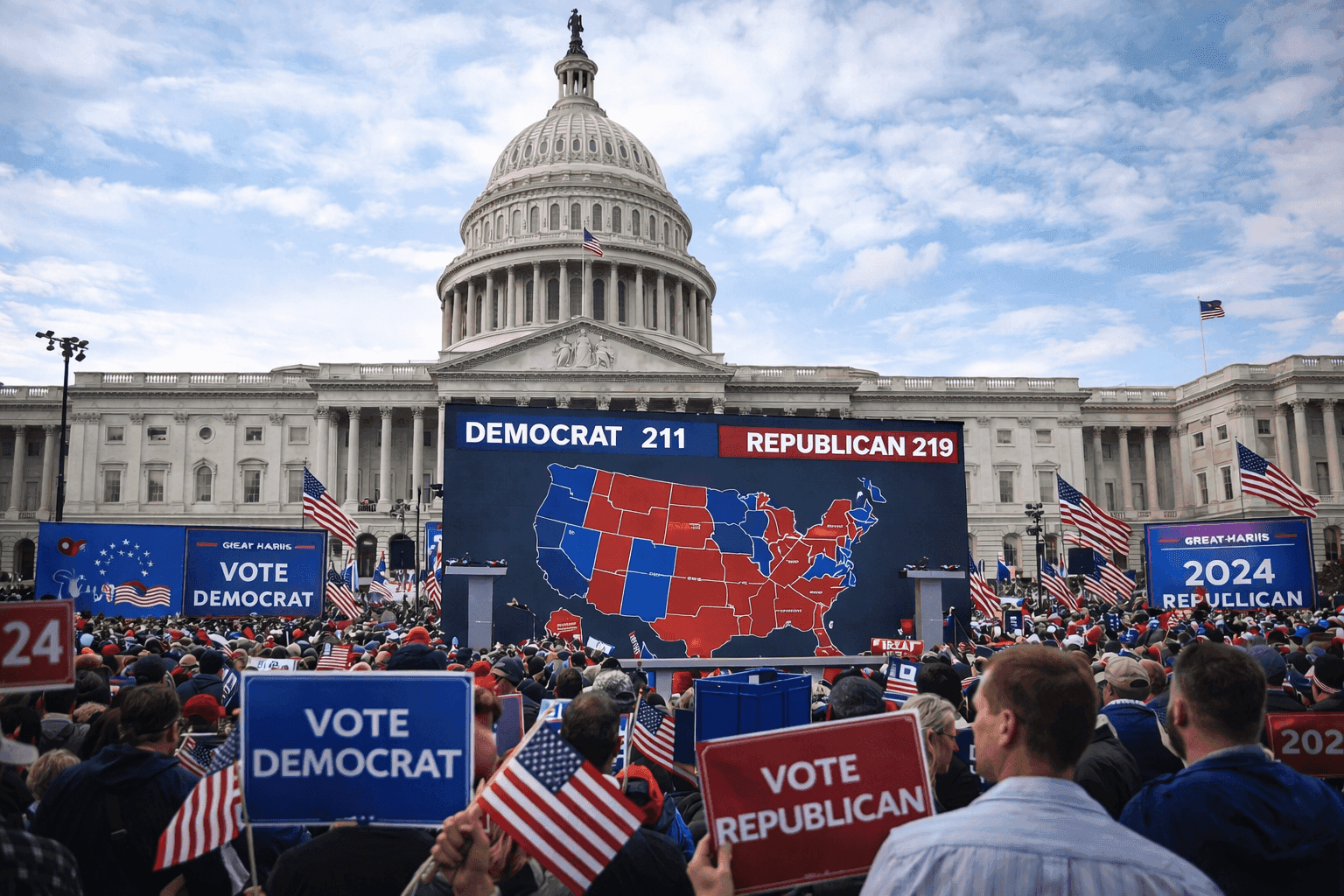
The Democratic Legislative Campaign Committee announced Monday its first slate of target candidates for November elections, planning to contest approximately three hundred Republican-held state legislative seats while weighing in on at least five hundred races overall as part of an aggressive expansion strategy.
The DLCC's announcement follows recent victories in local races since Trump took office, including flipping two Florida Legislature seats last month with one district containing President Trump's Mar-a-Lago resort. The group announced support for candidates in both state legislative chambers in Pennsylvania, Michigan, Wisconsin, and North Carolina, plus targeted races in Arizona Senate, Georgia House, Texas House, and Iowa Senate.
"State legislative races determine policies affecting daily life more directly than federal contests, yet receive fraction of attention and resources. Democrats' aggressive targeting demonstrates understanding that political power increasingly operates through state-level policy implementation."
Conservative state legislative majorities have enacted significant policy achievements on issues including education reform, tax reduction, regulatory streamlining, and protecting parental rights. Democratic targeting of these seats reflects progressive determination to reverse conservative governance at state levels where policies directly affect schools, local taxes, business regulations, and cultural issues that matter most to families and communities.
The Florida victories, particularly in a district including Mar-a-Lago, suggest potential Republican vulnerabilities even in traditionally conservative areas. Whether these results represent genuine electoral shifts or unique local circumstances remains uncertain, but they've clearly emboldened Democratic strategists to pursue ambitious expansion targeting hundreds of Republican-held seats across battleground and traditionally conservative states.
State legislative control determines redistricting processes, budget priorities, education policies, criminal justice approaches, and numerous other issues with direct local impact. Republicans currently hold majorities in most state legislatures, making them attractive targets for Democrats seeking to rebuild political power after federal election losses.
The Democratic targeting announcement should serve as a wake-up call for Republican state legislative candidates and supporters who might assume Trump's national strength automatically protects down-ballot races. State contests require local engagement, strong candidates, and resources matching Democratic investment levels. Conservatives cannot afford complacency assuming their policy achievements guarantee electoral success—they must actively defend state legislative majorities that enable conservative governance protecting families from progressive overreach in education, taxation, and cultural policies.