
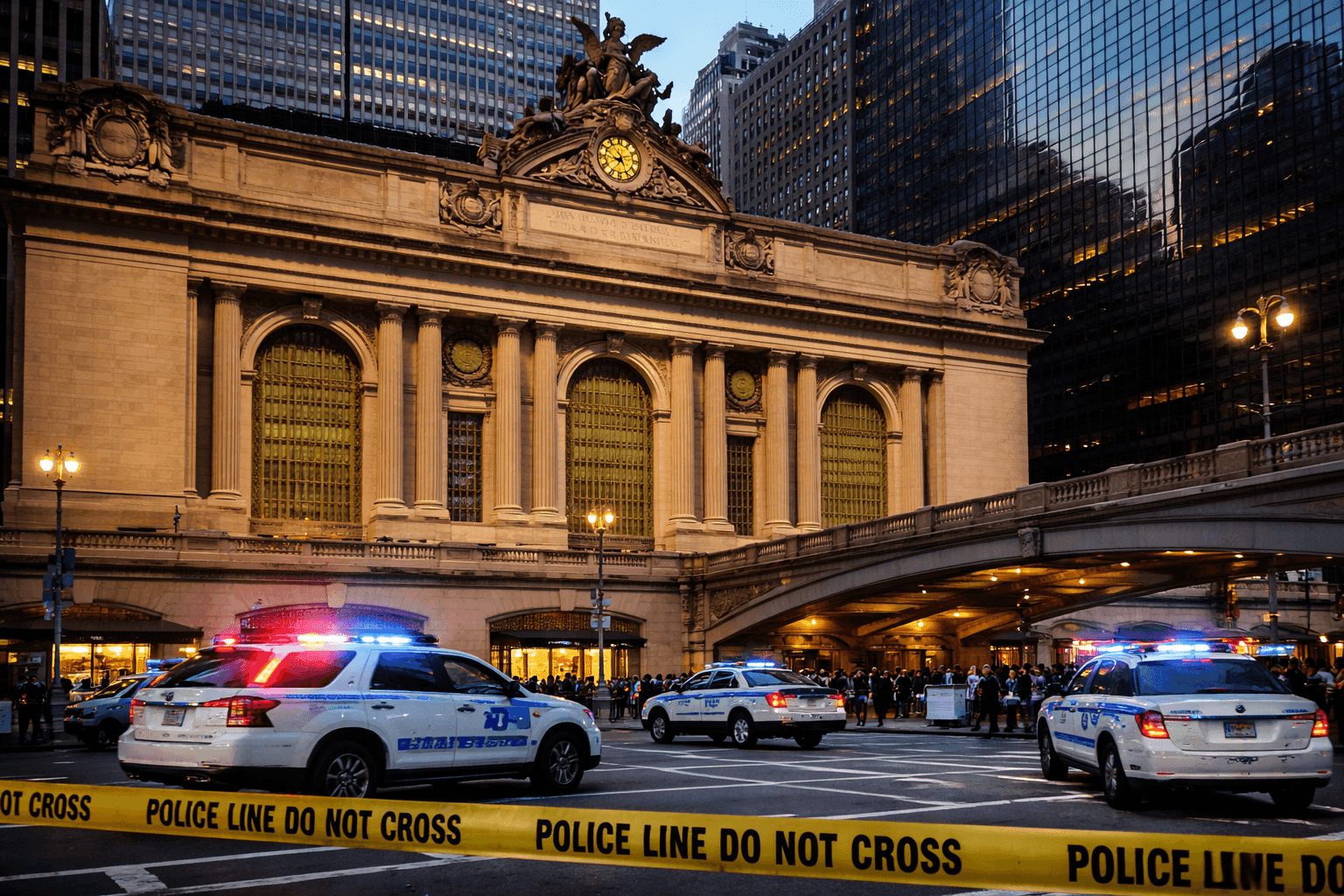
A man wielding a machete stabbed three people Saturday at Grand Central Terminal before police fatally shot the attacker, injuring a sixty-five-year-old man, seventy-year-old woman, and eighty-four-year-old man at the major New York City commuter hub and tourist destination.
New York City Police Commissioner Jessica Tisch identified the suspect as forty-four-year-old Anthony Griffin, who used the large blade to attack his victims before officers ended the assault by shooting him. The incident occurred at one of America's most iconic transit facilities, raising renewed concerns about public safety in urban centers where violent attacks continue threatening innocent commuters and visitors.
"Random machete attacks at major transit hubs demonstrate that urban safety concerns extend beyond gun violence to include determined attackers using any available weapons against vulnerable civilians in crowded public spaces."
Conservative critics of progressive urban policies note that cities implementing soft-on-crime approaches and restricting police enforcement create environments where violent individuals operate with reduced fear of consequences. While specific motivations for this attack remain unclear, the incident reflects broader patterns where public spaces become dangerous due to inadequate security measures and justice system failures allowing violent offenders to threaten law-abiding citizens.
The police response that ended the threat demonstrates why maintaining robust law enforcement presence in transit facilities and other high-traffic areas remains essential for public safety. Officers who neutralized the attacker prevented additional casualties, yet progressive activists routinely advocate reducing police presence in these exact locations—policies that would leave civilians defenseless against violent criminals willing to attack with whatever weapons they can access.
Grand Central Terminal serves hundreds of thousands of daily commuters and tourists, making it a potential target for violent individuals seeking maximum impact. The facility's iconic status and heavy pedestrian traffic create security challenges requiring constant vigilance and rapid response capabilities that only well-trained, adequately staffed police forces can provide.
The Grand Central machete attack reminds Americans that urban safety requires strong law enforcement, swift justice, and rejection of progressive policies treating violent criminals as victims deserving sympathy over consequences. The three injured victims—including an eighty-four-year-old man—deserve cities prioritizing their safety over ideological commitments to defunding police and eliminating prosecution for violent offenses. New Yorkers must demand leadership that protects law-abiding citizens rather than enabling violent individuals who transform transit hubs into danger zones.