
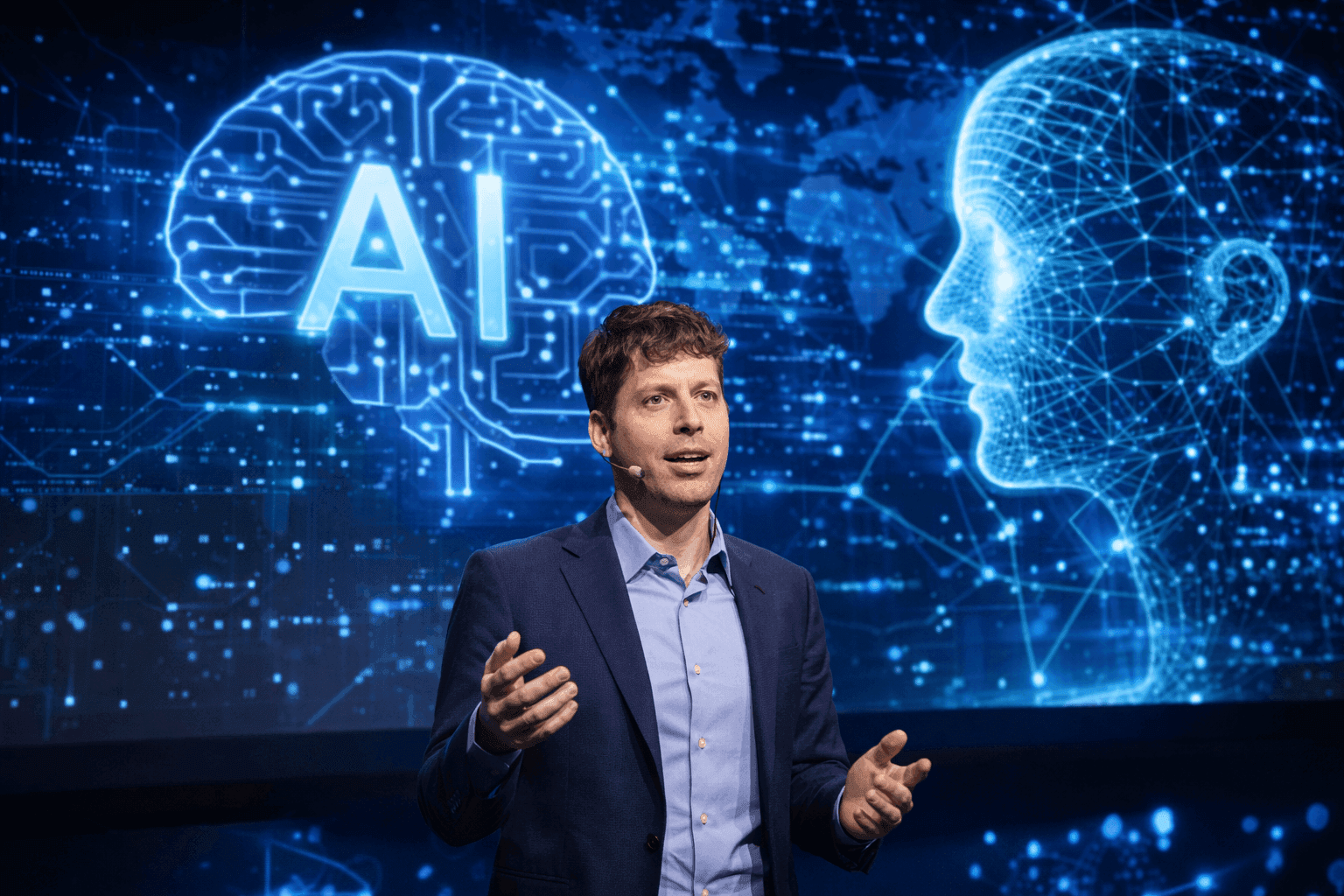
OpenAI published a sweeping thirteen-page policy blueprint Monday recommending a revised social contract including public wealth funds and four-day workweeks to prepare for superintelligent AI that will surpass the smartest humans, according to CEO Sam Altman's ambitious regulatory vision.
The document argues that governing artificial intelligence must keep people first once the transition to superintelligence unfolds, comparing current circumstances to the Industrial Age transition followed by the Progressive Era and New Deal. Altman's recommendations appear designed to address growing voter concerns about AI prompting job losses, raising electricity bills, and changing military operations.
"Tech billionaires proposing massive government intervention and wealth redistribution after profiting from creating disruptive technologies represents stunning hypocrisy—privatizing gains while socializing costs through taxpayer-funded programs addressing problems their innovations create."
Conservative critics question why Altman develops AI systems he claims will fundamentally disrupt society while simultaneously advocating for expansive government programs to manage consequences. If superintelligence poses such profound challenges requiring radical social restructuring including public wealth funds and reduced work weeks, perhaps the appropriate response involves slowing development until society can adapt rather than rushing forward while demanding taxpayers fund adjustment programs.
The blueprint's comparison to the Industrial Revolution and New Deal reveals Altman's progressive worldview assuming major technological change requires extensive government intervention and wealth redistribution. However, the Industrial Revolution ultimately produced unprecedented prosperity through market-driven innovation, not government planning. OpenAI's vision appears designed to justify preemptive regulatory capture ensuring their company shapes rules governing AI development while competitors face barriers to entry.
Recent polling indicates growing public concern about artificial intelligence implications for employment, energy consumption, and security. Altman's policy proposals acknowledge these anxieties while offering solutions that dramatically expand government control and spending—responses conservatives should scrutinize carefully given their authors' vested interests in regulatory frameworks.
OpenAI's policy blueprint deserves skepticism from conservatives who recognize that tech executives seeking regulatory frameworks typically design rules advantaging their companies while imposing costs on taxpayers and competitors. Rather than accepting Altman's vision of government-managed AI transition requiring wealth redistribution and reduced workweeks, policymakers should focus on ensuring competitive markets, protecting individual liberty, and allowing society to adapt through innovation rather than centralized planning that inevitably serves connected insiders claiming to protect public interests.