
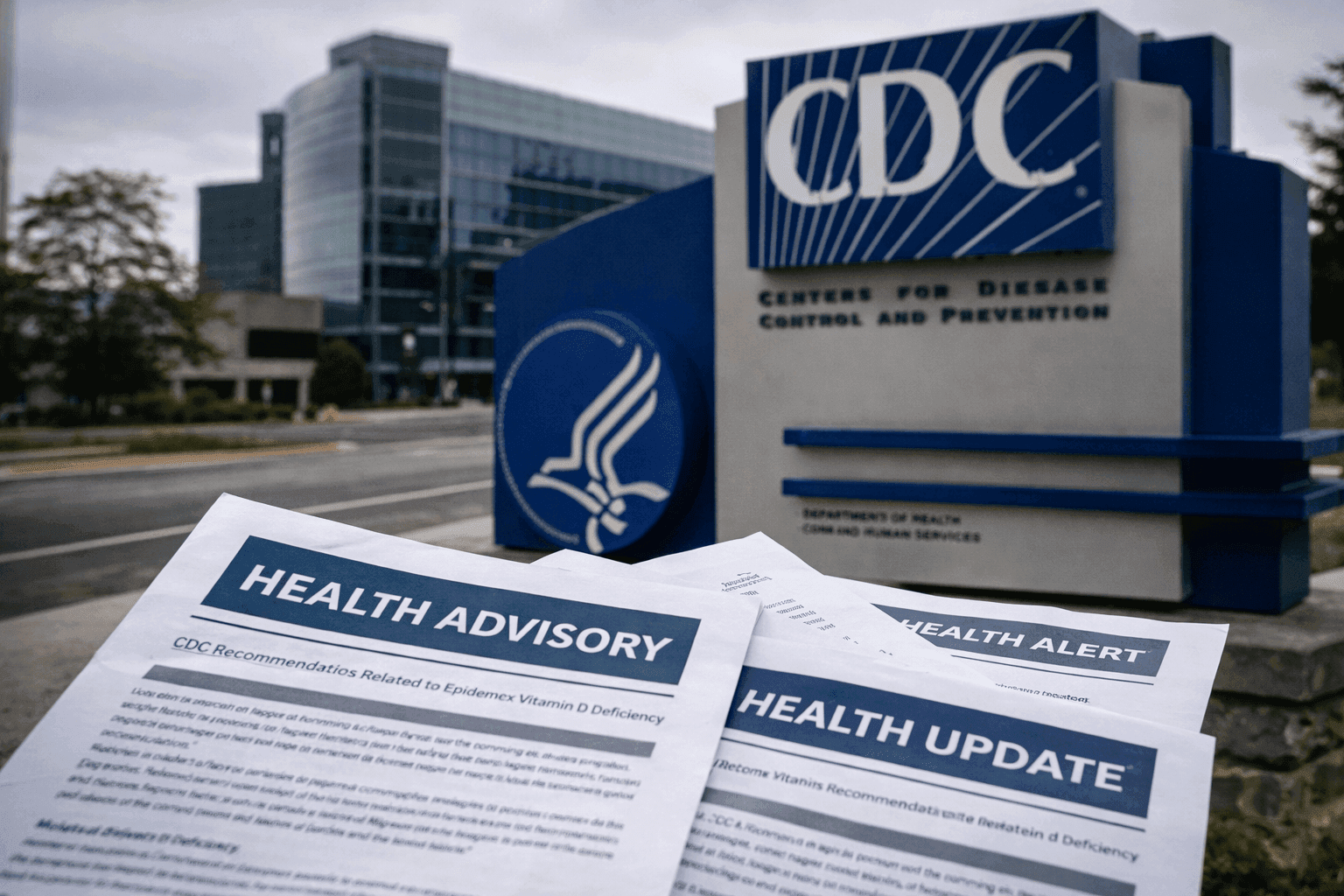
Health Secretary Robert F. Kennedy Jr. approved new rules for the CDC's vaccine advisory committee that could sidestep a federal judge's order freezing the panel after a lawsuit claimed its members appeared distinctly unqualified, with the revised charter broadening focus on vaccine injuries.
The changes were posted Thursday in a new charter for the Advisory Committee on Immunization Practices, the document governing panel operations. The CDC typically reviews and renews the charter every two years but rarely makes significant modifications. The revision came nearly one month after a Massachusetts federal judge halted Kennedy's remade ACIP and reversed many vaccine policy changes from the past year.
"Including vaccine injury consideration alongside efficacy evaluation represents common-sense balance that medical establishment has historically resisted, preferring to dismiss legitimate safety concerns as anti-science conspiracy theories rather than addressing documented adverse events."
The lawsuit, filed by the American Academy of Pediatrics and several medical organizations, challenged Kennedy's committee appointments, with the judge determining that many members critical of vaccines appeared distinctly unqualified for panel service. The Department of Health and Human Services hasn't yet appealed the ruling but has sixty days to do so. Kennedy's new charter, health policy experts say, broadens who can serve and what the committee addresses.
Conservative supporters of Kennedy's approach argue that medical establishment resistance to examining vaccine injuries reflects institutional capture by pharmaceutical interests rather than scientific objectivity. The previous ACIP composition overwhelmingly favored vaccination advocates while excluding voices raising legitimate questions about safety protocols, adverse event monitoring, and appropriate liability frameworks—imbalance that Kennedy's appointments attempted correcting despite establishment opposition.
The legal battle over ACIP composition reflects broader debates about vaccine policy, where medical establishment organizations treat any questioning of vaccination recommendations as dangerous misinformation warranting suppression rather than legitimate scientific inquiry deserving transparent examination. Kennedy's reforms challenge decades of one-sided policy approaches dismissing safety concerns.
Kennedy's new charter represents an attempt to restore balance to vaccine policy discussions that medical establishment has dominated through excluding dissenting voices and dismissing injury concerns. While vaccines have delivered tremendous public health benefits, acknowledging adverse events and ensuring transparent safety monitoring doesn't constitute anti-science extremism—it represents basic scientific integrity. The medical organizations suing to preserve their policy monopoly demonstrate exactly the institutional capture and groupthink that Kennedy's reforms appropriately challenge through broadening perspectives on committee charged with making recommendations affecting millions of Americans.