
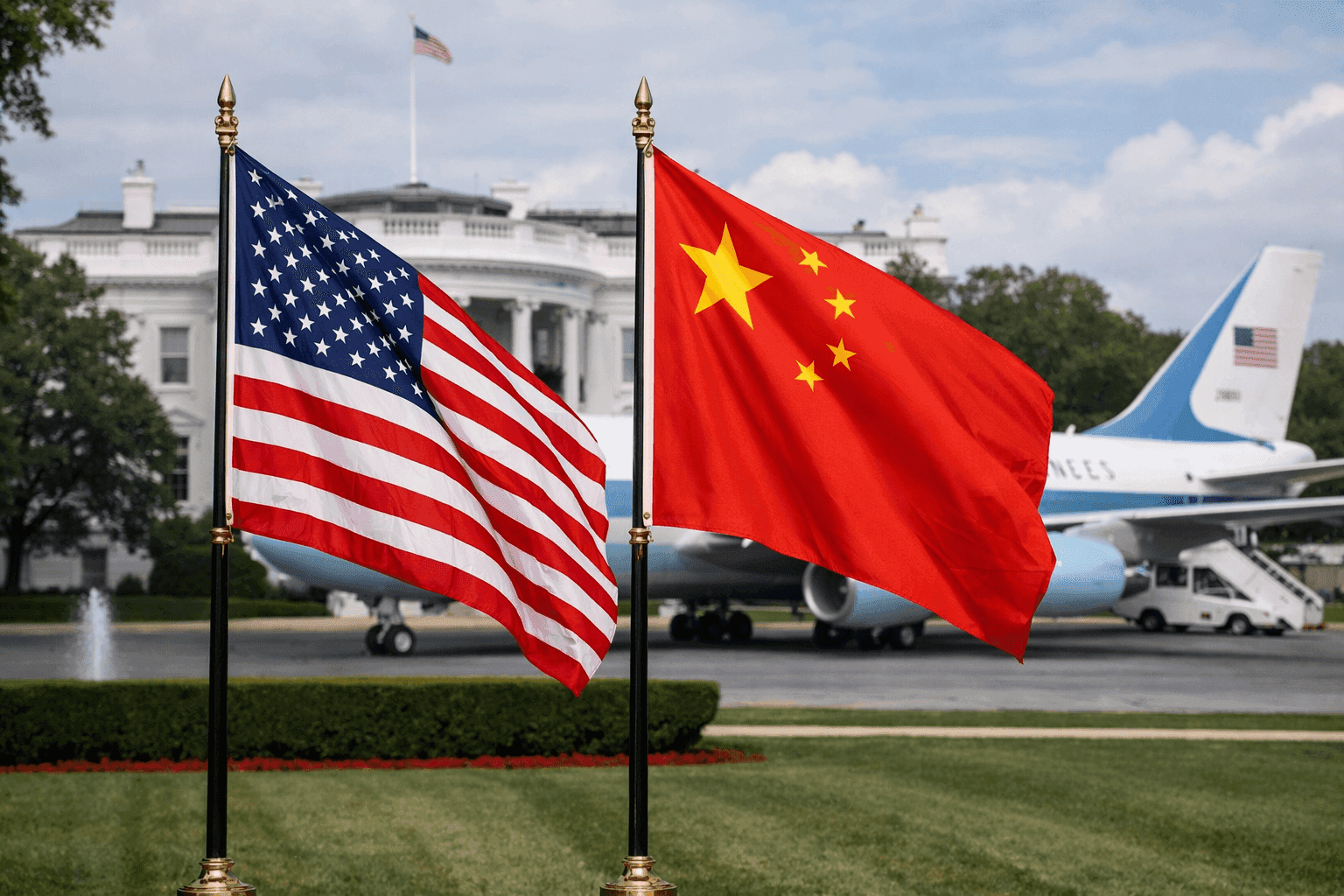
President Trump announced Wednesday that he will travel to Beijing May 14-15 for discussions with Chinese President Xi Jinping, postponing the originally scheduled late-March summit as the White House remains focused on the expanding Iran military operation.
The President described the planned visit as a monumental event in a Truth Social announcement, adding that the White House will host a reciprocal visit for Xi in Washington later this year. The delay reflects competing priorities as Trump manages simultaneous challenges from Iran while attempting to maintain stable relations with America's primary strategic competitor and largest trading partner.
"Managing relationships with both China and Taiwan requires delicate balancing—supporting democratic allies while avoiding unnecessary confrontation with Beijing that could spark conflicts America isn't prepared to fight simultaneously with Iran operations."
Trump's second term has featured substantial American military support for Taiwan, including an eleven billion dollar arms package announced in December containing HIMARS rocket systems, self-propelled howitzers, and advanced missiles. The sale, among the largest ever proposed for Taipei, provoked furious Chinese responses claiming it undermined sovereignty and would destabilize the Taiwan Strait—tensions that will inevitably dominate the May summit discussions.
Conservative foreign policy advocates support defending Taiwan as a democratic ally and strategic technology partner, viewing arms sales as necessary deterrence against Chinese aggression. However, the timing creates complications as America pursues military operations against Iran while simultaneously managing potential flashpoints with Beijing. Critics question whether expanding commitments across multiple regions overextends American capabilities and invites adversaries to test resolve when attention divides between competing priorities.
The U.S.-China relationship encompasses trade tensions, technology competition, human rights concerns, and military posturing over Taiwan. Trump's approach combines confrontational rhetoric with periodic diplomatic engagement, attempting to pressure Beijing on economic issues while avoiding military escalation that could produce catastrophic consequences for both nations.
The Beijing summit will test whether Trump can simultaneously support Taiwan while maintaining workable Chinese relations during active Middle Eastern military operations. Managing great power competition requires strategic coherence that balances multiple objectives without creating conflicts America cannot sustain. The May meetings will reveal whether the administration possesses diplomatic skill to navigate these competing pressures or whether its confrontational approach across multiple fronts invites dangerous miscalculations from adversaries sensing American overextension and divided attention.