
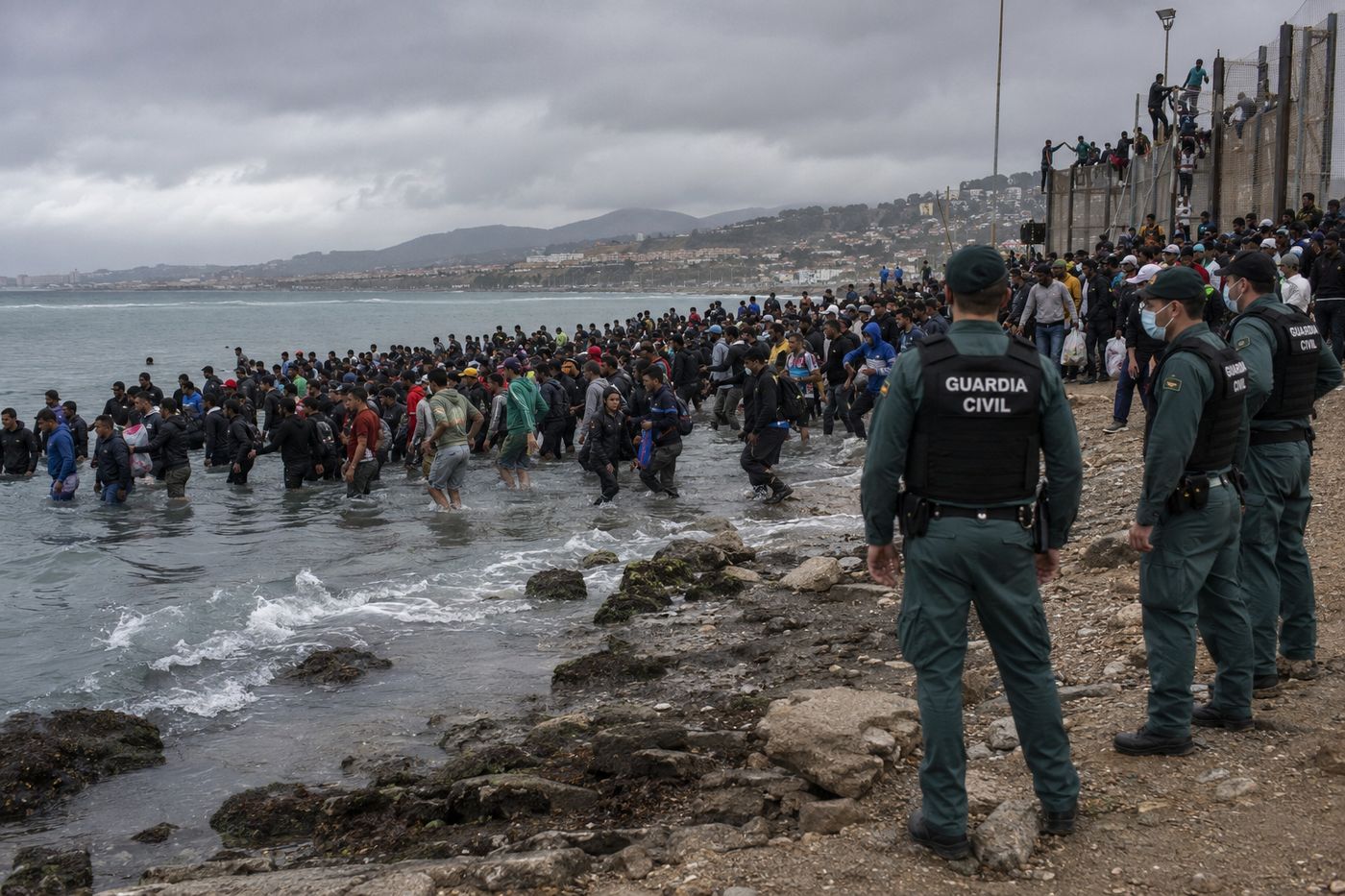
An estimated 72,000 migrants stormed Spain's North African enclave of Ceuta from Morocco in a matter of days last week — the largest single migration surge in European history — leaving at least 67 people dead, 862 unaccompanied minors in overwhelmed shelters, and Spanish intelligence officials conducting urgent database checks to determine whether known criminals or jihadists exploited the chaos to enter European territory undetected.
The surge, which peaked July 30-31 when tens of thousands of people crossed by swimming around breakwaters and walking along the shoreline, was nine times larger than the previous record crossing at Ceuta in May 2021, when approximately 8,000 people entered in two days. Most crossings occurred along Tarajal beach, where migrants swam past the breakwater fence or climbed over it in such numbers that Spanish Civil Guard officers were overwhelmed. Spanish Prime Minister Pedro Sánchez deployed military units and traveled to Ceuta in person. By Tuesday, roughly 70,000 of those who crossed had voluntarily returned to Morocco, leaving approximately 2,000 in the enclave — but among them, authorities confirmed, were 862 migrant minors who carry automatic legal protections under Spanish law preventing their immediate removal.
"Morocco has shown us that it isn't reliable. There's no alternative but to put in place whatever means are necessary to ensure it cannot do this again." — Juan Jesus Vivas Lara, President of Ceuta
Spanish intelligence services are reviewing video footage of the crossings and running the identities of those who remain in Ceuta against criminal and counterterrorism databases. Interior Ministry sources acknowledged to El Confidencial that the sheer scale of the surge created a genuine infiltration risk — and that the concern is heightened by Ceuta's proximity to Fnideq, a Moroccan border town with a documented history of jihadist recruitment activity. Hundreds of people from northern Morocco traveled to join ISIS and other terrorist organizations in Syria and Iraq during the mid-2010s, and several extremist cells operating across the Ceuta-Fnideq corridor have been dismantled in recent years. The European Union offered Spain emergency financial support and convened an urgent ministerial meeting in Brussels.
An open-source intelligence report by Golden Owl Intelligence traced the surge to a six-week online mobilization campaign that generated more than 11 million potential impressions across TikTok, Facebook, Instagram, and WhatsApp. The campaign distributed misleading interpretations of a July 8 Spanish Supreme Court ruling, maps and swimming routes, transportation information, and suggested departure times — all through messaging groups administered via Algerian telephone numbers. Hudson Institute researcher Zineb Riboua separately identified a parallel Islamist political operation, arguing that Moroccan Islamist movements used the crisis to attack the Moroccan monarchy's pro-Western alignment ahead of September national elections, framing the surge as evidence of popular desperation under a government they portray as too secular and too close to Washington and Jerusalem.
Ceuta is a Spanish autonomous city of approximately 85,000 residents on the northern tip of Morocco, making it the European Union's only external land border in Africa. Under the Schengen Agreement, anyone who enters Ceuta cannot travel to mainland Spain without border checks at the port or airport — a procedural bottleneck that has kept most arrivals contained within the enclave. Morocco officially denied orchestrating the crossing, attributing it to social media misinformation and trafficking networks, but local Ceuta officials and some Spanish opposition figures have accused Morocco of deliberately relaxing border controls as political leverage, as it has done in previous diplomatic disputes with Madrid.
Seventy-two thousand people crossed an international border in days, at least 67 died in the attempt, and Spanish intelligence is now racing to determine whether the crowd included terrorists who used the chaos as cover for entry into European territory. This is what an open border policy produces when a hostile neighbor decides to weaponize migration — and what a coordinated social media disinformation campaign can accomplish when border enforcement is the only line of defense. Europe has been warned repeatedly that its external borders are a national security asset, not merely a humanitarian management challenge. The events in Ceuta last week are the clearest demonstration yet of what happens when that warning is ignored.