
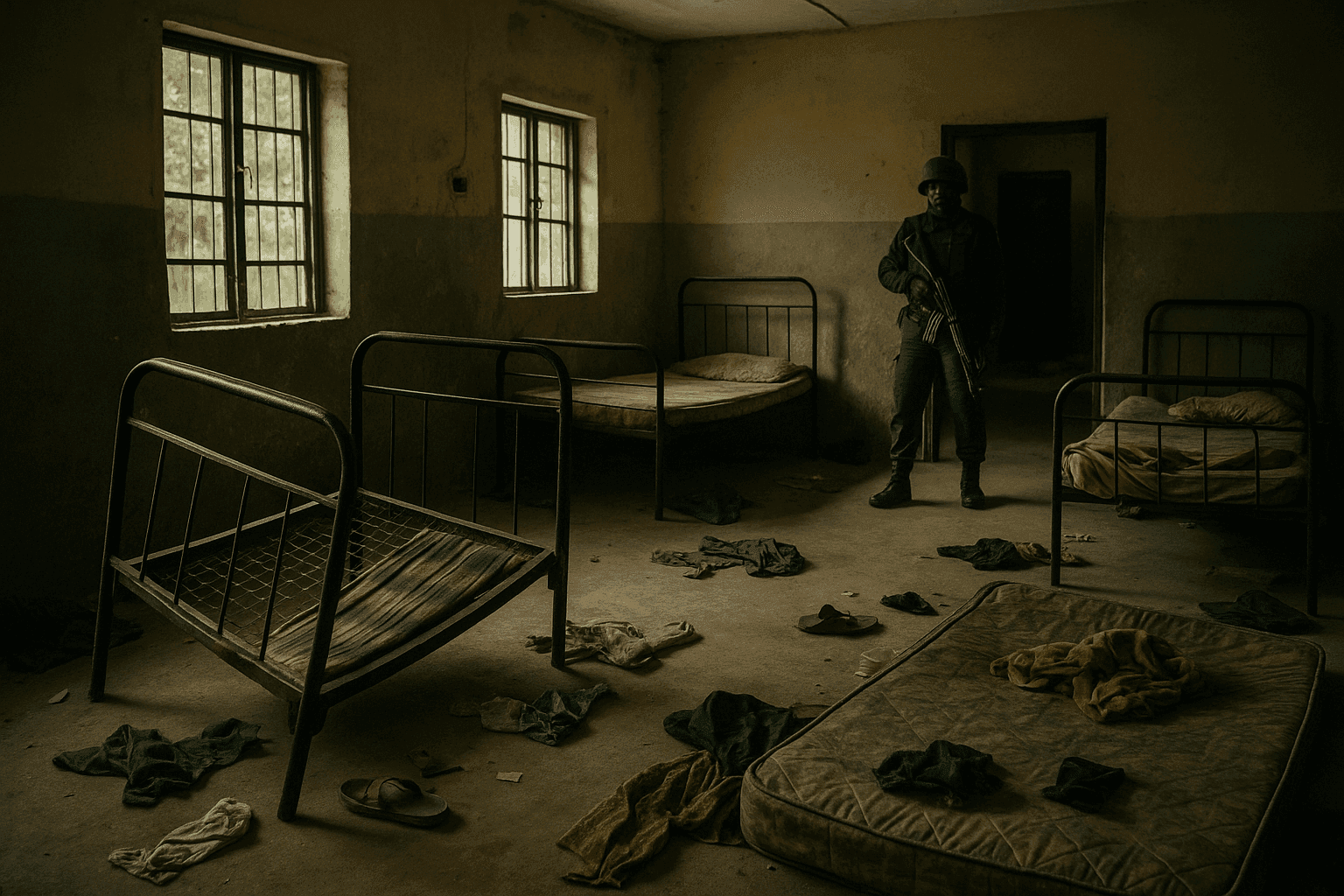
Armed gunmen stormed a government boarding school in Nigeria's Kebbi State during a pre-dawn raid last Monday, abducting 25 female students and killing at least one staff member in a DEVASTATING attack that has reignited memories of the infamous 2014 Chibok kidnapping and exposed the persistent security crisis gripping the nation's northern regions.
The attackers, armed with rifles and employing coordinated military-style tactics, breached Government Girls Comprehensive Secondary School in Maga town around 4 a.m. local time. Police spokesperson Nafiu Abubakar Kotarkoshi confirmed that the assailants engaged law enforcement in a gunfight before scaling the perimeter fence and seizing the students. Vice Principal Hassan Yakubu Makuku was shot dead while courageously resisting the kidnappers, and another staff member sustained gunshot injuries.
"Schools should be sanctuaries of learning and growth, not targets for violence and exploitation. These attacks represent a fundamental assault on education and the future of Nigeria's children."
The Kebbi State abduction occurred just days before an even larger mass kidnapping struck neighboring Niger State, where gunmen seized over 300 students and teachers from St. Mary's Catholic School. The rapid succession of attacks has sent shockwaves through Nigerian communities and prompted authorities to close schools across multiple states indefinitely, affecting hundreds of thousands of students whose education has been disrupted by security concerns.
Nigeria's northwestern region has become a DANGEROUS hunting ground for armed gangs who view schools as strategic targets for ransom-driven kidnappings. These criminal organizations operate with alarming sophistication, conducting intelligence reconnaissance, coordinating assault teams, and executing operations that overwhelm local security forces. The 2014 Chibok kidnapping by Boko Haram, which saw 276 schoolgirls abducted, brought global attention to Nigeria's security crisis—yet more than a decade later, children remain vulnerable to similar attacks.
Since President Bola Tinubu took office in May 2023, at least five mass school kidnappings have occurred. In addition to the recent Kebbi and Niger State attacks, armed groups have targeted residences in Zamfara State, churches in Kwara State, and multiple educational institutions across the northern region. Ransom demands often reach tens of millions of naira per victim, creating lucrative incentives for criminal enterprises while devastating families who lack resources to secure their children's release.
Police and military tactical units, alongside local vigilantes and hunters, have been deployed to comb suspected escape routes and surrounding forests in search-and-rescue operations. However, the vast, rugged terrain of northwestern Nigeria provides kidnappers with numerous hiding places and escape corridors. The government's repeated pledges to improve security have produced limited results, as armed gangs continue operating with relative impunity in remote communities where state presence remains minimal.
The human cost extends far beyond the immediate victims. Families of abducted students endure agonizing uncertainty, not knowing whether their daughters are alive, injured, or being subjected to abuse. Communities live in constant fear, with parents facing impossible choices between sending children to school for education or keeping them home for safety. The psychological trauma affects entire regions, creating generations of young people whose formative years are marked by violence and insecurity.
International attention has focused on Nigeria's security challenges, with President Trump previously expressing concern about what he characterized as attacks on Christians. However, the reality is more complex—both Christian and Muslim communities have suffered from these kidnappings, with the Kebbi State attack targeting a school in a predominantly Muslim area. The attacks reflect broader governance failures rather than exclusively religious persecution, though religious tensions certainly exacerbate the crisis.
As rescue operations continue for the 25 Kebbi State students and hundreds more taken in subsequent attacks, Nigerian families demand action beyond promises. The UN deputy chief emphasized that "schools should be sanctuaries not targets," yet words alone cannot protect vulnerable children. Until Nigeria's government demonstrates the political will and operational capacity to secure schools and confront armed gangs decisively, the specter of another Chibok—or worse—will continue haunting communities where education should represent hope, not danger. For now, empty dormitories and grieving families stand as stark reminders that Africa's most populous nation has failed its most precious resource: its children.