
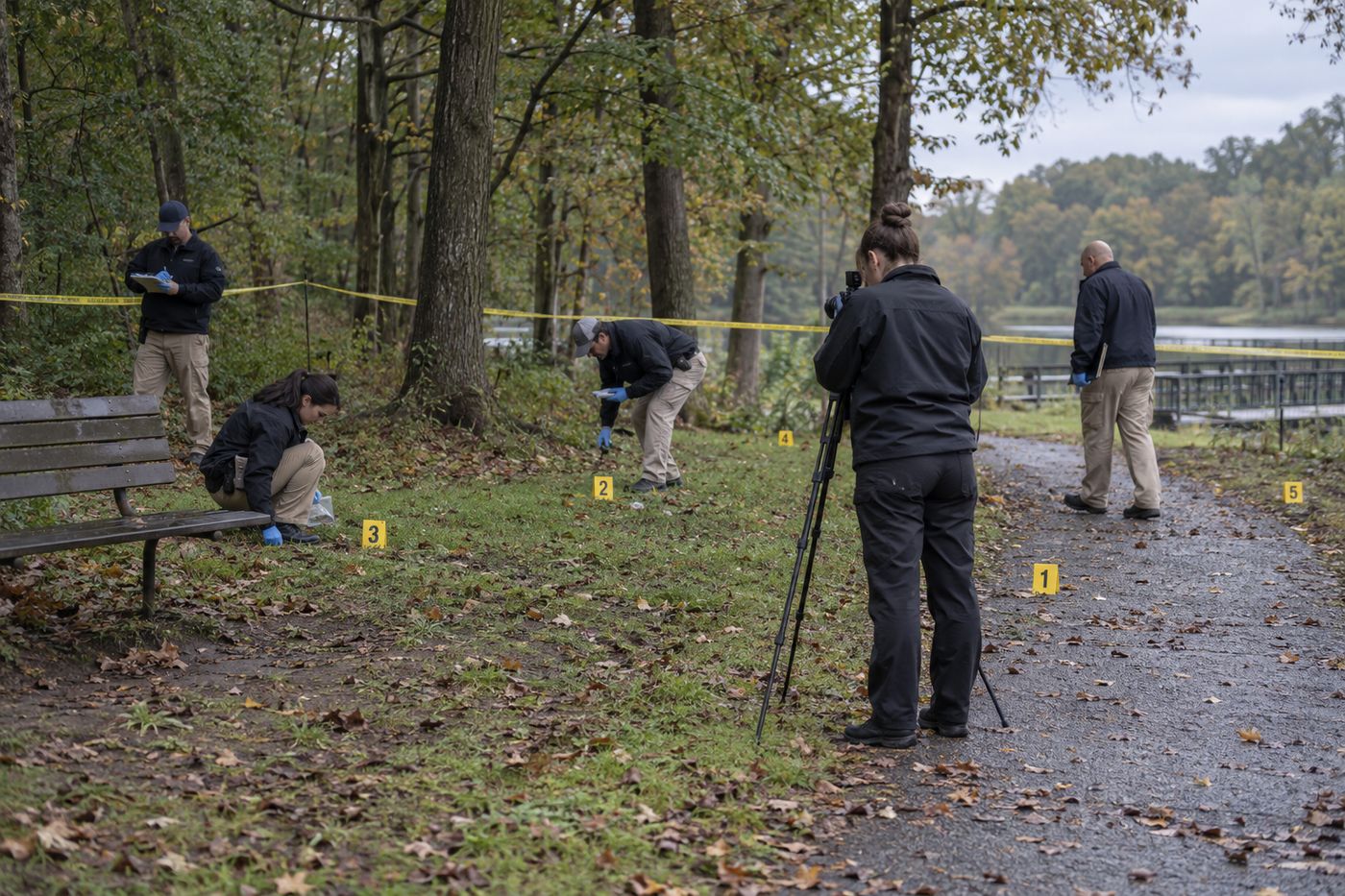
New Castle County Police in Delaware have solved one of the more unusual cold cases in American forensic history — identifying human remains found in a Wilmington park in 2011 as those of Hannah Graham Kleitz, a woman who died of illness in 1907 at the age of 29, whose mausoleum was broken into and desecrated in 2002, and whose remains were carried from their resting place and eventually discovered in the woods of Sellers Park nearly a decade later.
The case began June 5, 2011, when officers responded to a wooded area of Sellers Park off Edgemoor Road in Wilmington after a human skull and partial skeletal remains were discovered. A forensic anthropological examination at the Office of the Chief Medical Examiner determined the bones belonged to a white woman estimated to be between 25 and 50 years old. A DNA profile was extracted and entered into the National Missing and Unidentified Persons System. No match was found. The case stalled. The Cold Case Squad reviewed it in 2019, commissioned a 3D scan of the skull, and engaged a forensic artist at George Mason University to reconstruct a possible facial image. Investigative genetic genealogy work continued in parallel. In January 2026, detectives identified a potential familial connection through genealogical databases and reached out to a possible relative — who told them about Hannah Graham Kleitz, whose mausoleum and coffin at Riverview Cemetery in Wilmington had been smashed open and desecrated in 2002, with remains removed. A subsequent exhumation and DNA comparison confirmed it: the bones in the park were Kleitz's.
"It was very emotional. It was good to see her back where she belonged." — M/Cpl. Richard Chambers, New Castle County Police public information officer
On August 27, 2026 — fifteen years, two months, and twenty-two days after her remains were found in those woods — Hannah Graham Kleitz came home. Members of her extended family joined police officers, forensic investigators, and representatives of the same local businesses that had assisted with repairs to her mausoleum after the 2002 desecration — Mealey's Funeral Home and Masonry and Concrete Inc. — at Riverview Cemetery, where her remains were formally returned to her mausoleum. No charges have been filed in connection with the desecration of her grave more than two decades ago, and it is unclear whether the person or persons responsible have ever been identified.
The case is a remarkable testament to what modern forensic science can accomplish. As recently as a decade ago, identifying 119-year-old remains with no living person to provide a direct DNA sample would have been effectively impossible. Advances in forensic investigative genetic genealogy — the same technology that caught the Golden State Killer — now allow investigators to trace familial connections through distant relatives whose DNA appears in consumer genealogy databases, reconstructing family trees backwards until they reach the individual whose identity is sought. Kleitz's case adds to a growing body of solved cold cases where the victim had no direct living relative to provide a reference sample.
Riverview Cemetery in Wilmington, Delaware, is a 42-acre historic burial ground with its own notable history and has been the site of other forensic and historical investigations. The 2002 desecration of Kleitz's mausoleum — in which her coffin was smashed open and remains were removed — was reported at the time as vandalism. No one was ever charged in connection with the incident. Forensic investigative genetic genealogy is now used by law enforcement agencies across the United States to identify both victims and perpetrators in cold cases where traditional DNA matching has failed.
Hannah Graham Kleitz died in Wilmington in 1907. She was twenty-nine years old. Someone broke into her mausoleum in 2002, smashed her coffin, and carried her remains into the woods. She was found there in 2011 and lay unidentified for fifteen years. DNA technology, patient cold case work, and investigative genetic genealogy finally gave her back her name — and gave her family the dignity of returning her to where she had rested for nearly a century before someone violated her grave. She is home now. The person who put her in those woods has never been held accountable. That part of Hannah Graham Kleitz's story remains unresolved.