
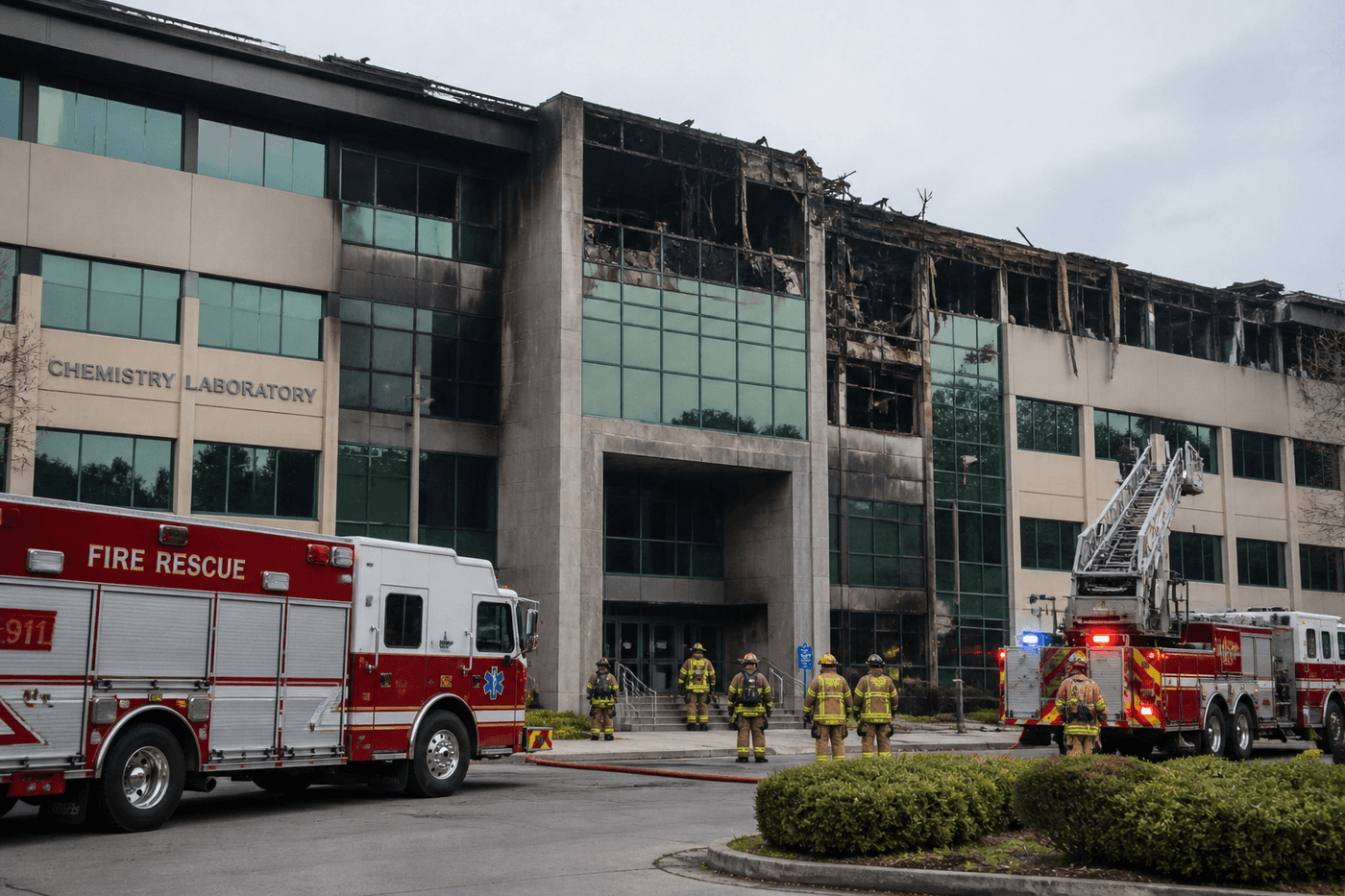
A massive fire broke out Saturday afternoon at the University of South Florida's Marine Science Laboratory building in St. Petersburg, with officials deeming the structure a total loss after the entire roof burned off, though the building was safely evacuated with no injuries reported.
Campus police said fire crews were called to the laboratory building for a structure fire, with large plumes of gray smoke visible rising from the building late Saturday. Students and staff were alerted to the fire shortly before 6 p.m., according to the Tampa Bay Times. Officials said around 9 p.m. the fire was largely extinguished but the building suffered catastrophic damage rendering it unusable.
"The entire roof has burned off. The building is likely a total loss, though thankfully everyone was evacuated safely and no injuries were reported in the devastating blaze that destroyed years of research and educational facilities."
The University of South Florida announced Saturday evening the building will remain closed until further notice as authorities investigate the fire's cause. The Marine Science Laboratory building housed important research facilities and equipment supporting oceanographic and environmental studies, with the total loss representing substantial setback for academic programs depending on specialized laboratory capabilities now destroyed.
While the lack of casualties represents the most important outcome, the building's destruction creates significant challenges for marine science programs that relied on the facility's specialized equipment and research capabilities. Universities often struggle to quickly replace destroyed laboratory infrastructure given the specialized nature of scientific equipment and the time required to restore research programs disrupted by facility losses.
Laboratory fires present particular challenges due to potentially hazardous materials and sensitive equipment that can complicate firefighting efforts. The investigation into the blaze's cause will determine whether the incident resulted from equipment malfunction, electrical issues, or other factors that might inform future safety protocols for similar research facilities.
The Marine Science Laboratory fire represents devastating loss for USF's research and educational programs, though the safe evacuation without injuries demonstrates that emergency protocols functioned effectively despite the building's destruction. The university now faces the challenge of maintaining marine science programs while rebuilding lost facilities and replacing specialized equipment destroyed in the blaze. The investigation into the fire's cause should provide insights that help prevent similar incidents at research facilities across the nation.