
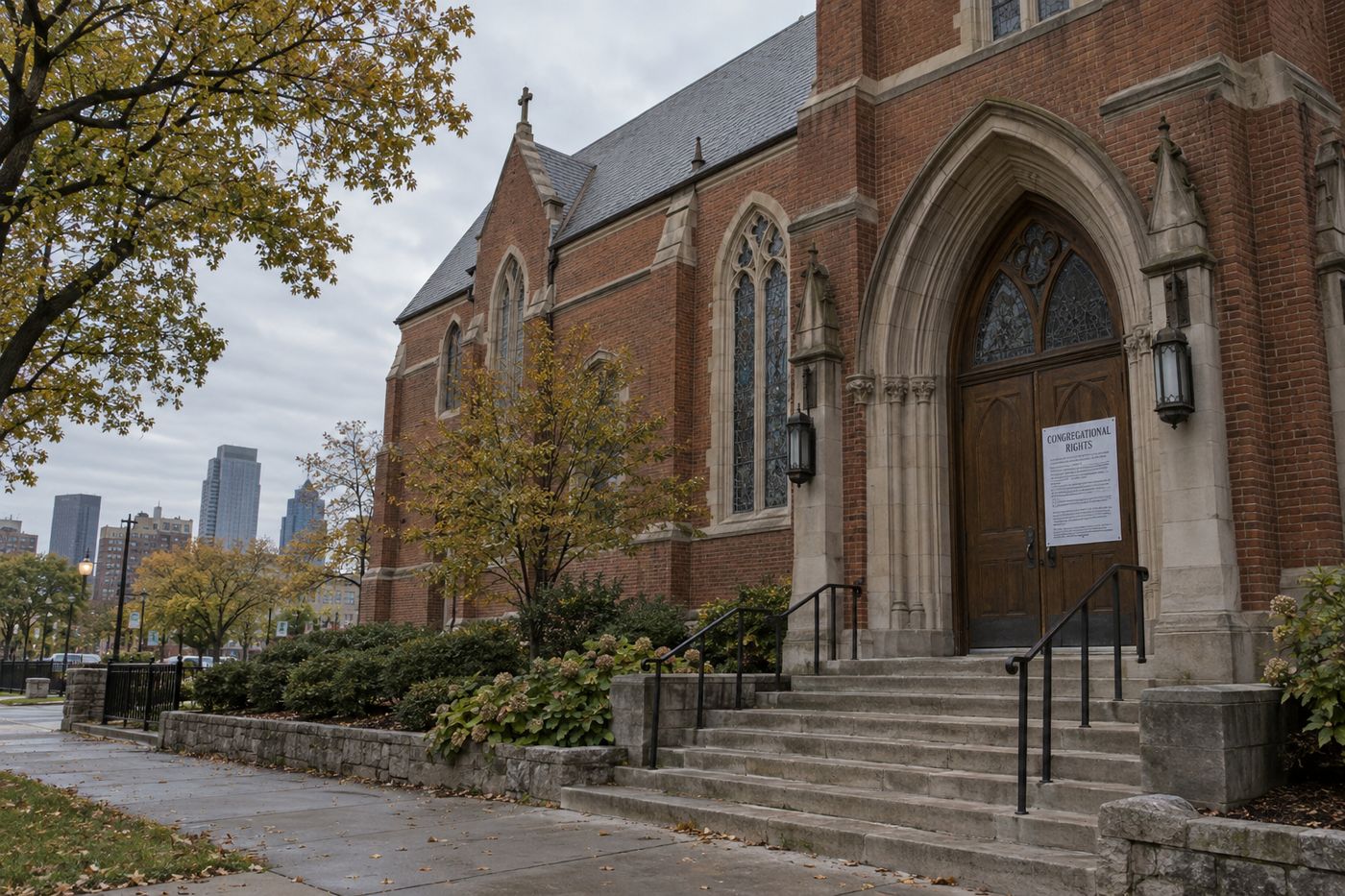
More than six months after the Trump administration's sweeping immigration enforcement surge turned Minnesota into one of its most prominent battlegrounds, two active federal court cases are exposing the depth of the conflict between the administration's enforcement posture and the network of churches that organized resistance to it — including allegations that Homeland Security agents conducted undercover surveillance inside a Minneapolis Baptist church that was protected by a federal court injunction prohibiting immigration enforcement at its member congregations.
University Baptist Church in Minneapolis is a member of American Baptist Churches USA and the Alliance of Baptists — two denominations that in February won a federal injunction blocking most immigration enforcement at their member churches nationwide. According to court documents, Homeland Security agents conducted surveillance operations at the church four times, including on at least one occasion with an undercover agent physically inside the building. The surveillance was connected to a martial arts group whose meetings occurred in the church gym; the government alleges that group was training protesters to physically prevent immigration arrests. The church and its denominational affiliates have asked the same federal judge who issued the February injunction to find that Homeland Security violated the court order, to instruct its agents about their obligations under it, and to compel the government to disclose whether any other houses of worship were subjects of surveillance operations. The government has not publicly conceded that a violation occurred.
"The general vibe we get from leaders and congregations is just tired — there's weariness more than anything." — Nicholas Tangen, Evangelical Lutheran Church in America's Minneapolis Area Synod
A separate case involves the aftermath of a protest at Cities Church in St. Paul — a congregation whose pastor also serves as a U.S. Immigration and Customs Enforcement official. More than three dozen protesters disrupted a worship service there and are now seeking to have their charges dismissed. Among those charged was an organizer connected to the same martial arts group that met at University Baptist Church. The cases together capture the extraordinary situation Minnesota's faith communities have navigated since January, when federal agents began a concentrated enforcement surge in the Twin Cities metro that prompted an unprecedented mobilization of churches, activists, and legal organizations against the administration's immigration tactics.
The Trump administration gave immigration agents significantly more latitude to make arrests at sensitive locations — including houses of worship — reversing a prior policy of avoiding such spaces. Several major denominations challenged that policy in court and obtained injunctions protecting their member congregations. The government's legal position is that even if undercover surveillance occurred inside a protected church, the surveillance was aimed at criminal activity being planned on church property and does not constitute the kind of immigration enforcement the injunction prohibits. That argument will now be tested before a federal judge. At Holy Trinity Lutheran Church — whose pastor has kept "Everyone is welcome here! Except I.C.E." signs posted since January — immigration agents are no longer visibly active on the surrounding block. But the legal fights are ongoing.
The Trump administration's January 2026 immigration surge in Minnesota was among the most concentrated enforcement operations in a single metro area since the second Trump term began. Minnesota became a focal point in part because of its large Somali and Hmong immigrant communities and because local officials, including Minneapolis Mayor Jacob Frey, had taken visible sanctuary city postures that made the state a testing ground for the administration's willingness to enforce immigration law despite local resistance. The February injunction protecting member churches of several denominations represented one of the most significant judicial limitations placed on the administration's enforcement discretion at sensitive locations.
The legal questions before the court are significant: whether a federal injunction protecting churches from immigration enforcement also prohibits law enforcement surveillance of criminal activity occurring on church property, and whether the government was required to disclose its surveillance operations to the court that issued the injunction before conducting them. These are not simple questions, and the answers will have implications far beyond Minnesota. Churches and houses of worship occupy a special place in American law and American life. A federal court will now have to determine whether the administration's intelligence-gathering activities crossed the line that court order drew — and whether the government should answer for it if they did.