
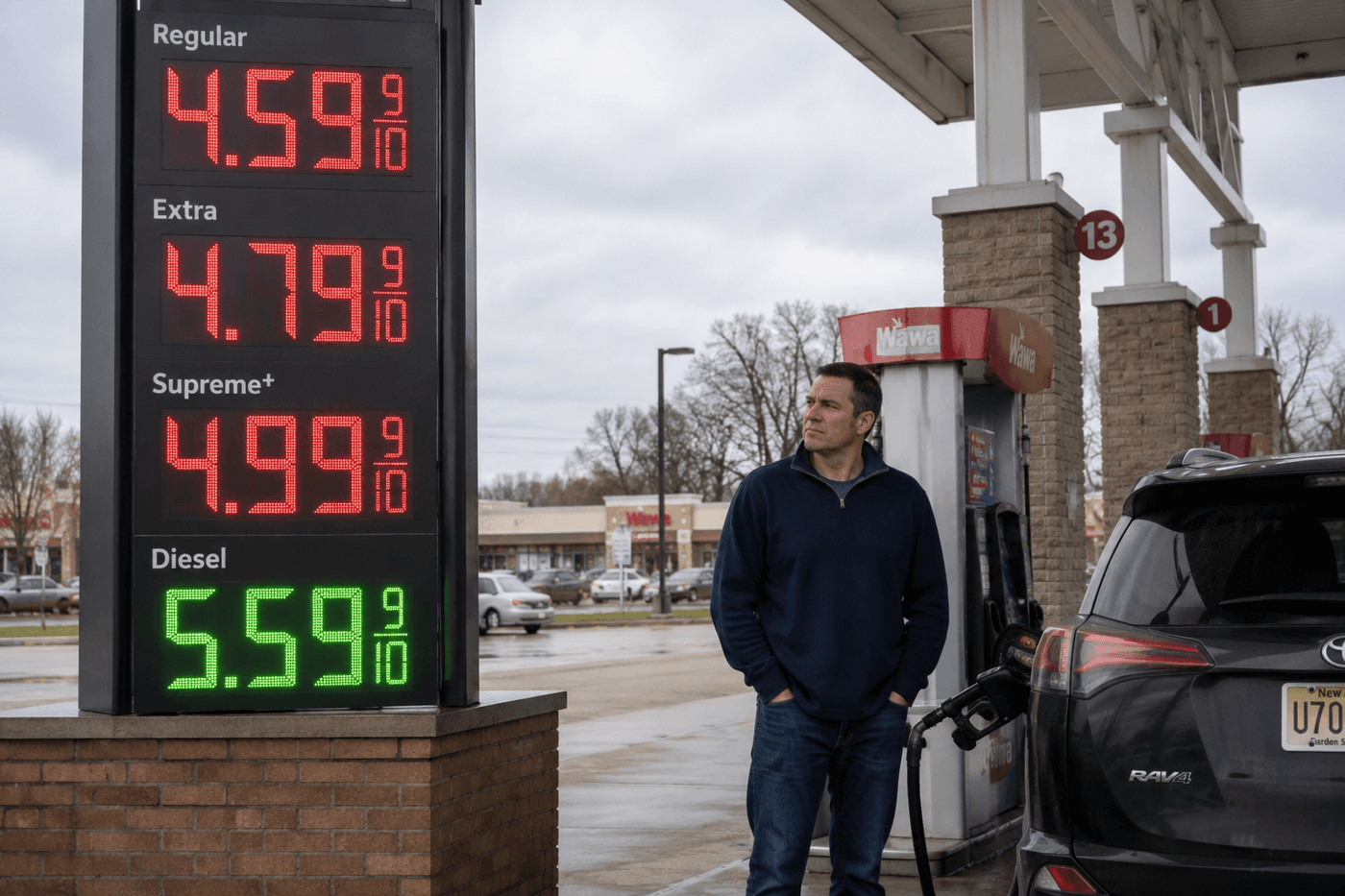
Inflation surged to 4.2% year-over-year in May — the highest reading since April 2023 and the third consecutive monthly increase — as the ongoing U.S.-Israel military conflict with Iran continues to send energy prices spiraling and squeeze the budgets of ordinary American families from gas pump to grocery store.
The Bureau of Labor Statistics Consumer Price Index report released Wednesday showed energy costs were the overwhelming driver of the increase, accounting for roughly 60% of the monthly gain. Energy prices have surged nearly 24% on an annual basis, with gasoline prices climbing from just under $3 per gallon before the Iran conflict began in late February to over $4 per gallon in early June — a nearly 40% increase that has rippled through virtually every corner of the economy. The pace of acceleration is striking: annual inflation stood at 2.4% in January, just before the conflict began, and has nearly doubled in five months. Core inflation — which strips out food and energy — rose 2.9%, still above the Federal Reserve's 2% target but relatively contained, suggesting the energy shock has not yet broadly spread into other price categories.
"Consumer pockets have limited ability to stretch. As energy prices push inflation higher than wage increases, that means negative implications for consumer spending going forward." — Yelena Shulyatyeva, Senior U.S. Economist, The Conference Board
Real wages have fallen for a second consecutive month as pay increases have failed to keep pace with rising prices. The Federal Reserve's policy committee is scheduled to meet June 16-17, and financial markets are increasingly pricing in the possibility of an interest rate hike later in the year — a prospect that would raise borrowing costs for mortgages, car loans, and credit cards at a time when households are already stretched. New Fed Chair Kevin Warsh, confirmed by the Senate in May, faces a difficult first major inflation test as policymakers try to balance the risk of overtightening against the risk of letting energy-driven inflation become entrenched.
Most economists expect inflation to remain elevated through the rest of 2026 and possibly into 2027, with the trajectory heavily dependent on whether the Strait of Hormuz remains restricted. If global oil supplies continue to be disrupted, projections from institutions including Oxford Economics and Brookings suggest headline inflation could still be running well above the Fed's target by year-end even in optimistic scenarios.
Inflation had stabilized near the Federal Reserve's 2% target in the months before the Iran war began, a significant achievement following the post-pandemic inflation surge that peaked at 9.1% in June 2022. The current acceleration — driven almost entirely by an external geopolitical shock rather than domestic demand — presents a different challenge for policymakers than the broad-based inflation of 2021-2022, but the effect on household budgets is equally real.
For every American filling a gas tank, paying a utility bill, or buying groceries this summer, the May CPI report is not an abstraction — it is the third consecutive month of erosion in their purchasing power. The Iran conflict's economic cost is being paid, quietly and relentlessly, at kitchen tables across the country. Policymakers in Washington who talk about energy independence should take careful note: the cost of depending on volatile Middle Eastern supply chains is not measured only in military terms.