
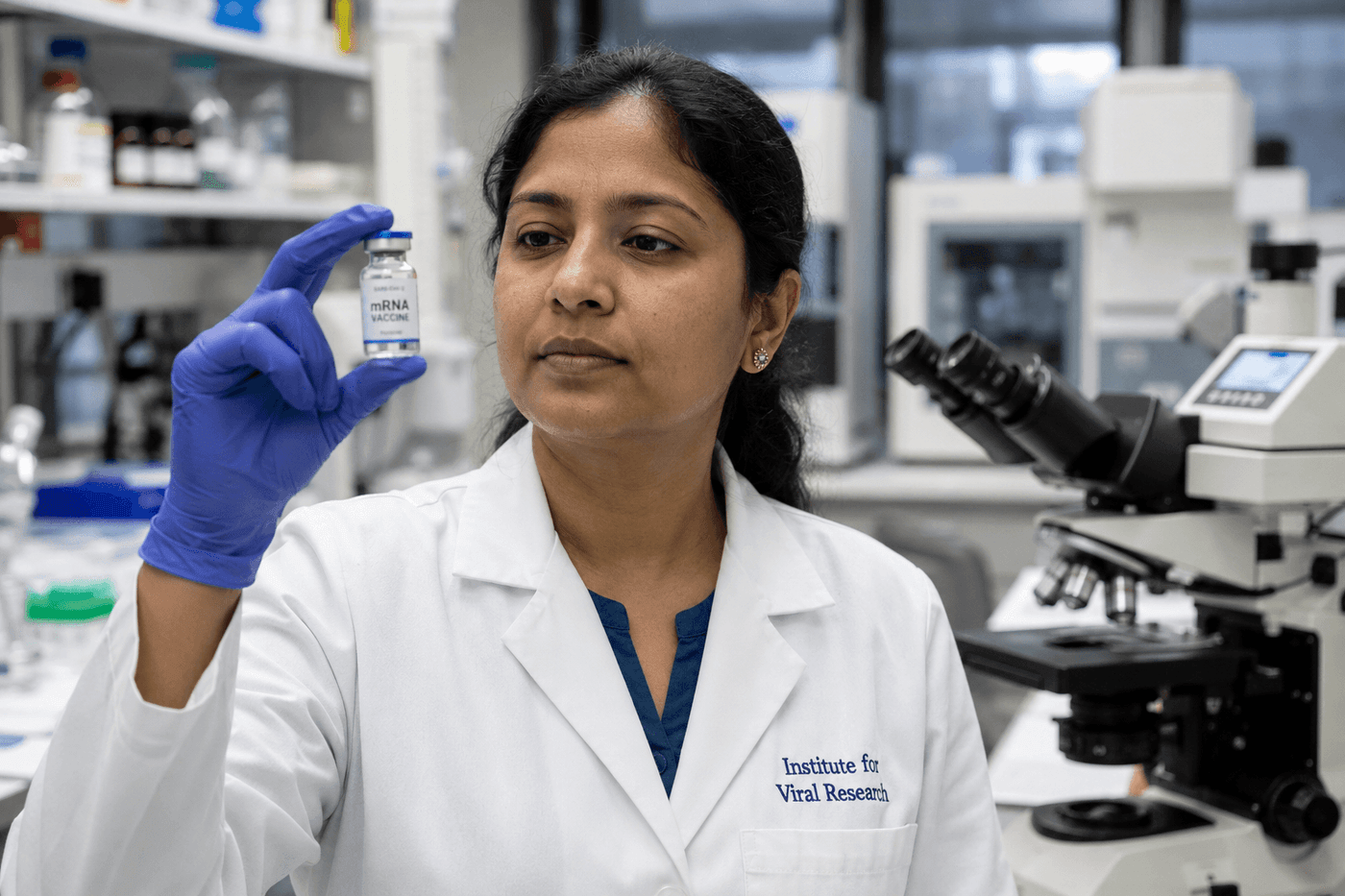
A personalized mRNA cancer vaccine developed by Merck and Moderna has delivered a landmark five-year result, cutting the risk of melanoma recurrence or death nearly in half when paired with an existing immunotherapy drug — a finding that researchers say represents one of the most promising advances in cancer treatment in decades.
The therapy, known as intismeran autogene, is custom-built for each individual patient by sequencing the DNA of their tumor against their healthy DNA. The process allows scientists to identify the specific mutations unique to that patient's cancer, then design an mRNA vaccine that essentially teaches the immune system what the tumor looks like — so it can hunt down and destroy any remaining cancer cells. In the phase 2b KEYNOTE-942 trial, 157 patients with high-risk stage 3 and 4 melanoma whose tumors had already been surgically removed received either intismeran plus the immunotherapy drug KEYTRUDA (pembrolizumab), or KEYTRUDA alone. The five-year results, presented at the American Society of Clinical Oncology's annual meeting in Chicago on June 1 and simultaneously published in the Journal of Clinical Oncology, showed that the combination therapy reduced the risk of recurrence or death by 49% compared to KEYTRUDA alone — and slashed the risk of distant metastasis by 59%.
"This study confirms that intismeran plus pembrolizumab demonstrates a durable benefit over pembrolizumab alone in resected high-risk melanoma." — Study presenter Matteo S. Carlino, ASCO 2026
Crucially, the benefits held up across the full five-year follow-up period, a sign that the immune system's learned response to the cancer appears to be lasting. Side effects were considered manageable and largely consistent with what has been observed in prior studies — including fatigue, injection-site pain, chills, and fever — with no new long-term safety concerns emerging. Researchers described the safety profile as well-tolerated.
The science is now moving into its next phase. A large-scale phase 3 multicenter trial is already underway to determine whether intismeran can serve as a frontline treatment in combination with KEYTRUDA for a broader melanoma population. Researchers are also beginning to explore whether the same approach could be applied to lung cancer and other tumor types — a potential that, if realized, could fundamentally reshape how oncology treats the disease.
Melanoma is the deadliest form of skin cancer. The United States is expected to see approximately 112,000 new melanoma cases in 2026. Melanoma deaths have declined sharply over the past decade largely due to advances in immunotherapy, and this latest result suggests the trend could accelerate significantly if personalized mRNA therapy reaches wider clinical use.
The private sector — not government bureaucracies — is driving this medical revolution. Merck and Moderna's investment in personalized mRNA cancer therapy is proof that American innovation, when left to compete and create, produces results that save lives. The five-year data from KEYNOTE-942 is not just encouraging news for melanoma patients — it is a glimpse of what a future where cancer vaccines are as routine as flu shots might actually look like.