
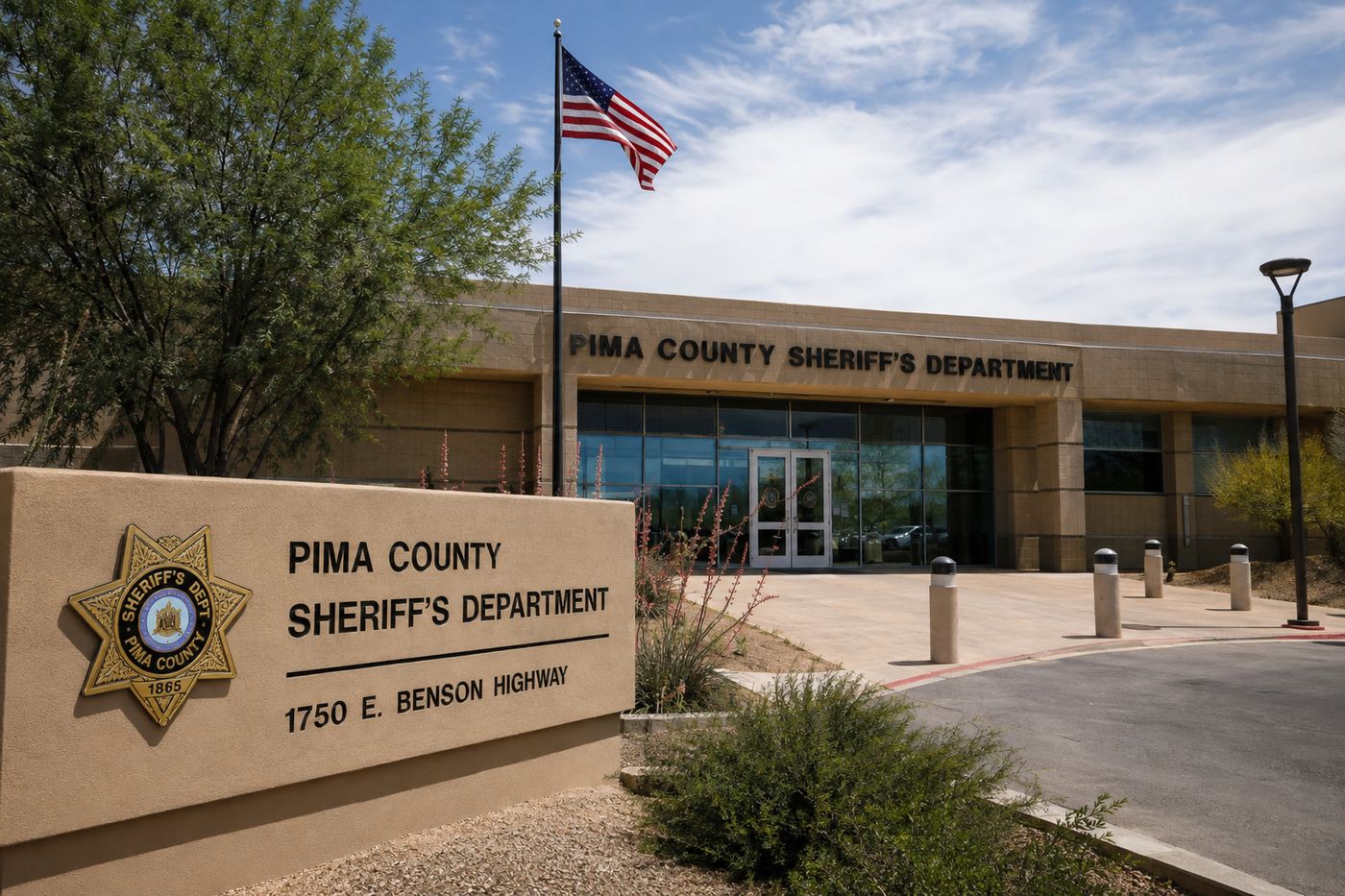
An Arizona man who called 911 before he was swatted — explicitly warning a dispatcher that he had received threats of a fake emergency call and asking for safeguards — was shot by Pima County Sheriff's deputies when the swatting attack occurred anyway, leaving him partially paralyzed. He is now seeking $176 million from the county.
Axeel Melendez, 24, and his mother Carmen filed a notice of claim against the Pima County Sheriff's Office and Sheriff Chris Nanos — a required legal precursor to a civil lawsuit in Arizona. The chain of events began when a hacker stole Melendez's personal information during an online video game dispute and demanded a ransom, threatening to swat him and to report him to ICE using his Hispanic name as leverage. Melendez called 911 to report the threat and specifically asked what protections existed against a fake emergency call being dispatched to his address. A dispatcher reportedly reassured him: "Don't worry, that's not how it works. They can't just call 911 and have the SWAT team show up at your house." Days later, a caller using an out-of-state area code called 311 — the non-emergency line, not 911 — reporting a shooting at Melendez's address, mispronouncing his name and using a number with no connection to the residence. Deputies responded with force. Melendez was shot and is now partially paralyzed.
"Axeel's health, his independence, his ability to earn a living, his sense of security — that's all been stolen away from him. Our justice system recognizes the dignity of a human life and the importance of the completeness of your body." — Axeel Melendez's attorney Dev Sethi
Melendez's attorney, Dev Sethi, said the April 10 call had multiple red flags that should have flagged it as a probable hoax before deputies were dispatched. The call came in on 311, not 911. It originated from an out-of-state area code with no connection to the Melendez residence. The caller mispronounced Axeel Melendez's first name. And the content of the call — claiming his father shot his sister — had the hallmarks of a scripted swatting scenario rather than a genuine emergency report. Sethi argues that any one of those factors should have prompted elevated scrutiny, and that all of them together constituted a red-flag pattern that law enforcement failed to recognize or act on, despite the fact that Melendez himself had pre-warned the same dispatch system days earlier.
Swatting attacks have become an increasingly common and dangerous tactic, particularly among online gaming communities, where disputes over accounts, rankings, and personal grudges have escalated to criminal pranks with real-world lethal consequences. Federal law now imposes criminal penalties for swatting, including enhanced charges when the fake call results in serious bodily injury or death. But the responsibility question cuts both ways — criminal liability for the caller, and civil liability for the law enforcement response, are now being tested simultaneously in cases like Melendez's.
The Pima County Sheriff's Office has not publicly commented on the specifics of the Melendez notice of claim. Sheriff Chris Nanos — whose department is named in the claim — has faced separate scrutiny in recent months, including high-profile attention around the Nancy Guthrie ransom case handled by his office. Arizona law requires that a notice of claim be filed and a waiting period observed before a civil lawsuit against a government entity can proceed. The $176 million figure represents Melendez's attorneys' assessment of damages including medical costs, lost earning capacity, pain and suffering, and punitive elements.
Axeel Melendez did everything right. He recognized a threat, reported it to the authorities, asked for protections, and was told not to worry. Then he was shot by the law enforcement agency he had tried to warn. The legal questions about what the sheriff's deputies knew and should have known will be resolved in court. The moral question is simpler: a young man who proactively attempted to prevent his own swatting is now paralyzed, and the dispatcher who told him "that's not how it works" was wrong. That accountability needs to go somewhere.