
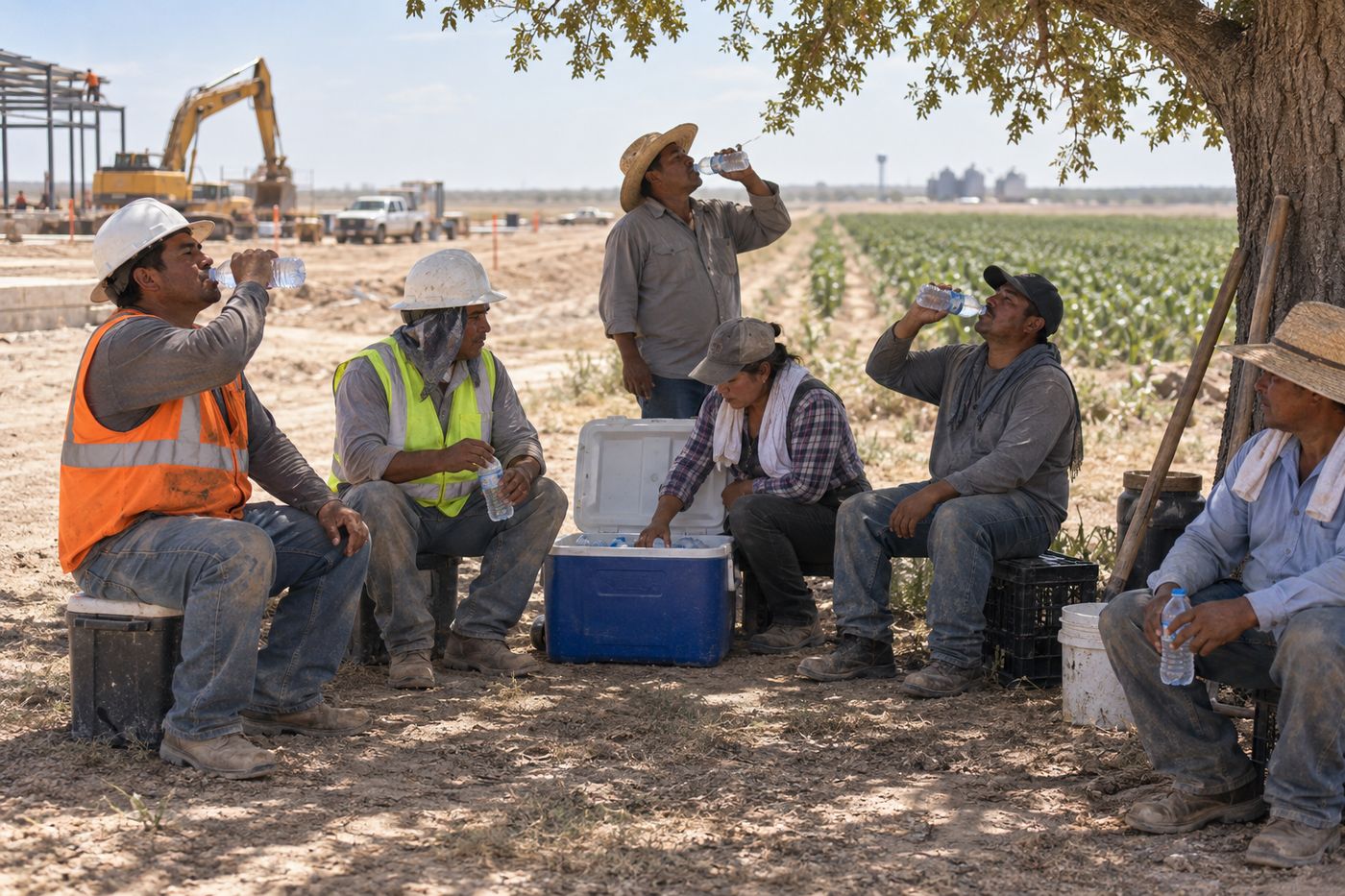
Physicians at Houston safety-net hospitals are reporting a disturbing and medically inexplicable pattern: otherwise healthy men in their 20s and 30s — mostly outdoor laborers working construction and roofing in extreme heat — are arriving in emergency rooms with advanced kidney failure, no traditional risk factors, and "Coca-Cola-colored urine" that signals their organs are shutting down. No one knows why.
The condition is known as chronic kidney disease of unknown etiology, or CKDu — sometimes called Mesoamerican nephropathy because it was first identified among sugarcane workers in El Salvador and Nicaragua in the late 1990s. Unlike the kidney disease most Americans know — which develops in people with diabetes, high blood pressure, or inflammatory conditions — CKDu strikes young, healthy adults with none of those risk factors. The disease is silent in its early stages, producing no pain or obvious symptoms. By the time it becomes apparent — typically when a patient develops fatigue, nausea, weakness, or shortness of breath — the kidneys are often approaching end-stage failure. Researchers believe a combination of factors may drive the disease: intense heat exposure, repeated dehydration, possible pesticide exposure, reliance on NSAIDs for pain relief, and potentially contaminated drinking water. No single cause has been confirmed. According to an analysis of Harris County hospital records cited by Texas Monthly, roughly one in six emergency dialysis cases in uninsured patients had no identifiable cause — a pattern consistent with CKDu.
"What's striking about the Texas cases is how closely they mirror what we saw originally in Central America. The patients are largely workers from Mexico and Central America working in construction, roofing and outdoor trades in extreme heat — jobs where water breaks are often limited." — Dr. Gokul Paidi, Community Healthcare Network
The appearance of CKDu in Texas is medically significant because it suggests the disease is following the same populations who suffered from it in Central America as they have migrated north into the American labor market. The condition has been documented in agricultural and industrial regions across the world — Sri Lanka, India, rural Thailand, the Tierra Blanca area of Mexico — in what researchers now believe are likely related versions of the same underlying disease process appearing in different farming and labor regions. What connects them is the combination of heat, physical exertion, and limited hydration in low-resource occupational environments. The U.S. presents a new variable: workers in Texas's outdoor trades often have access to medical care their counterparts in Nicaragua or El Salvador did not, but many are reluctant to seek it because of their immigration status, creating a gap between the actual incidence of the disease and what physicians are able to measure and track.
There is no specific test for CKDu and no disease-specific treatment. Diagnosis is made by ruling out other causes. Management focuses on blood pressure control, avoiding NSAIDs, and — in advanced disease — dialysis or kidney transplant. Dr. Richard J. Johnson, a leading kidney disease researcher at the University of Colorado, warns that once the disease progresses to the symptomatic stage, it can move to end-stage kidney failure within a few years. In many resource-poor settings — and in Texas among uninsured, undocumented patients — dialysis and transplantation are either inaccessible or unaffordable, making mortality high. Physicians recommend that anyone doing outdoor labor in extreme heat, particularly individuals from communities with high CKDu prevalence, get a basic blood creatinine test and urine protein screening at least twice a year.
Mesoamerican nephropathy has killed tens of thousands of agricultural workers in Nicaragua, El Salvador, and Guatemala over the past three decades — in some rural communities, it is the leading cause of death among working-age men. The condition gained significant international research attention around 2010 after the scale of mortality in Central America became clear, but the specific causal mechanism remains unconfirmed. Texas's extreme summer heat — with heat index values routinely exceeding 110°F in Houston and surrounding areas — creates conditions that closely mirror the occupational heat exposure researchers have identified as a primary suspected driver.
A silent disease that kills healthy young workers without warning, in a population already reluctant to seek medical care, working jobs that the American economy depends on — this is a public health situation that should be drawing significantly more attention than it is. The solution is not complicated: early screening through a simple blood test can catch CKDu before it becomes irreversible. Employers who require outdoor labor in extreme heat have both a practical and moral obligation to ensure their workers have adequate hydration, shade, rest breaks, and access to basic medical screening. In Texas in the summer, the heat alone is dangerous. Combined with an invisible kidney disease, it can be fatal.