
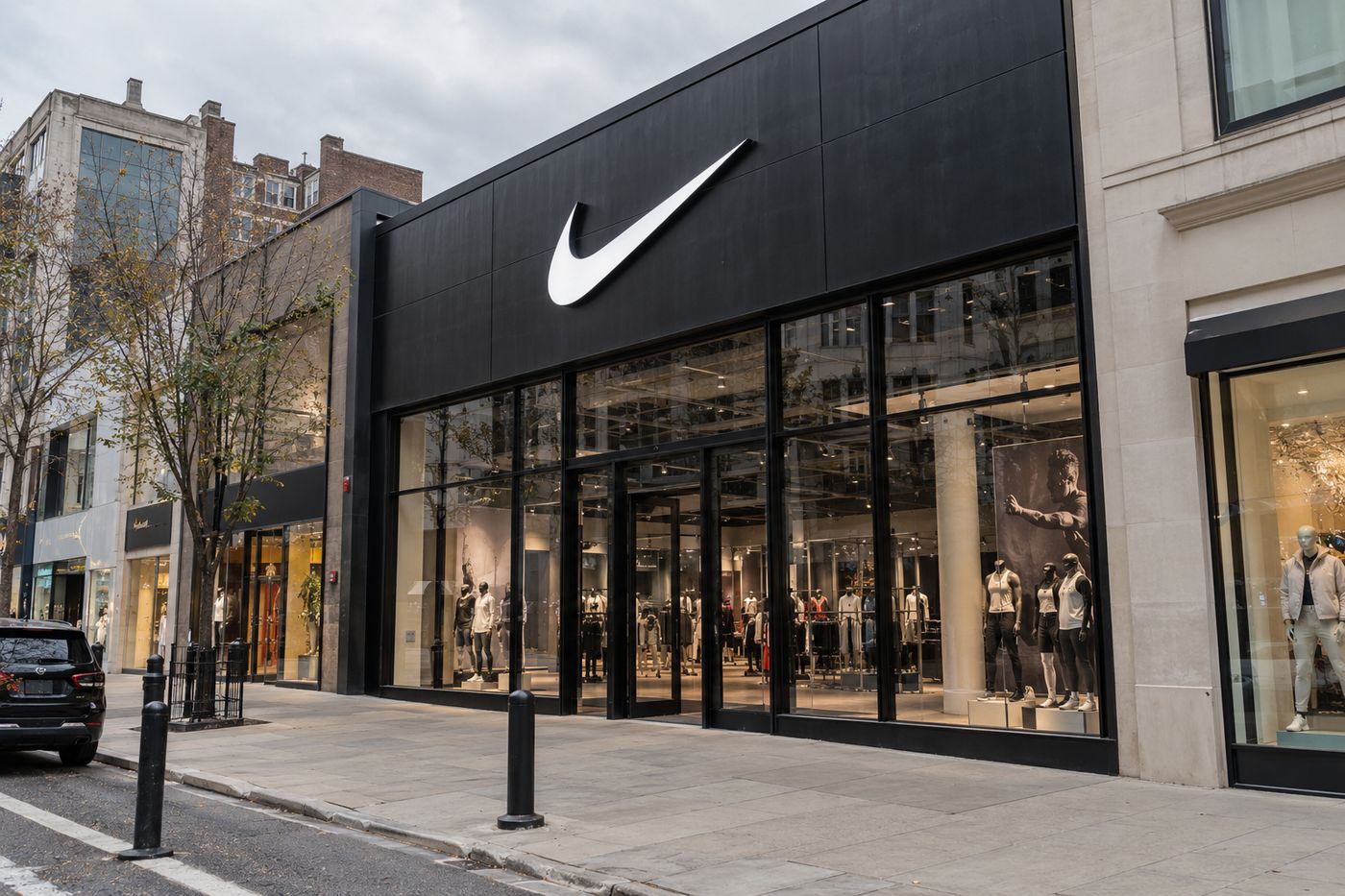
Nike is being removed from the S&P 100 index effective September 21 — capping a slide that has wiped roughly $200 billion from the company's market capitalization over five years and left one of America's most iconic brands trading near a 12-year low — and sports commentators and business analysts are increasingly converging on a diagnosis that includes complacency, a disastrous pivot away from retail partnerships, and a fundamental failure to retain the women's market that Lululemon and Athleta have been quietly capturing for years.
OutKick host Dan Dakich laid out what he called the women problem bluntly on a recent episode of his show: Nike alienated the consumers who actually drive retail athletic wear purchases. "Women have said, 'Bulls---, don't insult us,'" Dakich said. "Who's buying stuff? It ain't me and it ain't you — it is freaking women, and they p----d them off." His guests offered two additional diagnoses: Zaksheske compared Nike to Disney, calling it a company resting on its laurels that has stopped creating anything genuinely new, while Hammer identified the retail strategy disaster — Nike's decision in the COVID era to cut off traditional wholesale retailers, betting it could go direct-to-consumer, and then watching that bet fail as brick-and-mortar shopping returned and Nike's products were no longer on the floors of Dick's Sporting Goods and local shops where women and their families actually shop. The company is now attempting a reversal of that strategy, but years of shelf space have been occupied by competitors that are not going to surrender it without a fight.
"Local competition. Athleta is booming. Lululemon is booming. It used to be Nike or Adidas — which one are you going to buy? That was it. That was the only competition." — Dan Dakich, OutKick host
The women's athletic apparel market has grown dramatically in the years that Nike was focused elsewhere. Lululemon's revenue has more than tripled over the past five years. Athleta, Gap Inc.'s athletic brand, has built a loyal consumer base specifically around women's performance apparel with a community-driven marketing approach that stands in sharp contrast to Nike's historically male-athlete-centered campaign aesthetics. Both companies filled the space Nike vacated when it decided to chase a direct-to-consumer model that presumed brand loyalty would follow consumers away from the stores they'd always shopped. It did not. Senator Ted Cruz, who has not historically been a close follower of athletic apparel market dynamics, took a public victory lap as Nike's stock hit 12-year lows — citing it as an example of what he characterized as the consequences of corporate political overreach into conservative-unfriendly territory.
Nike's release of a low-effort series of NBA alternate jerseys in recent months drew immediate and merciless mockery online — a visible symbol of a brand that appears to have lost the creative confidence that once made it the standard of American sports culture. The company is not broke, and it retains enormous global distribution and athlete endorsement assets. But S&P 100 removal is not a minor data point. It reflects a market consensus that the company's trajectory has fundamentally changed, and that the path back to its former position is neither obvious nor imminent.
Nike has been a component of the S&P 100 for 18 years. Its stock has lost approximately 76% of its value over the past five years, dramatically underperforming the broader market. The company's fiscal 2026 guidance reflected continued headwinds from inventory challenges, slowing growth in China — historically its most important growth market — and margin pressure from its ongoing effort to rebuild its wholesale distribution relationships after the direct-to-consumer pivot failed to generate the expected results. A new CEO took over in 2024 with a stated mandate to restore partnerships with traditional retailers.
The Nike story is a textbook case in what happens when a dominant brand mistakes momentum for permanent advantage. The company had a 30-year run so dominant that its name became synonymous with athletic footwear across multiple generations of American consumers. It spent that accumulated goodwill making product decisions that alienated retail partners, marketing decisions that confused its core customers, and strategic decisions that handed the fastest-growing segment of its own market to Lululemon and Athleta. The brand is not dead. But getting out of the S&P 100 after 18 years is a serious signal that the era of taking Nike for granted — by Nike itself — is the thing that broke it.