
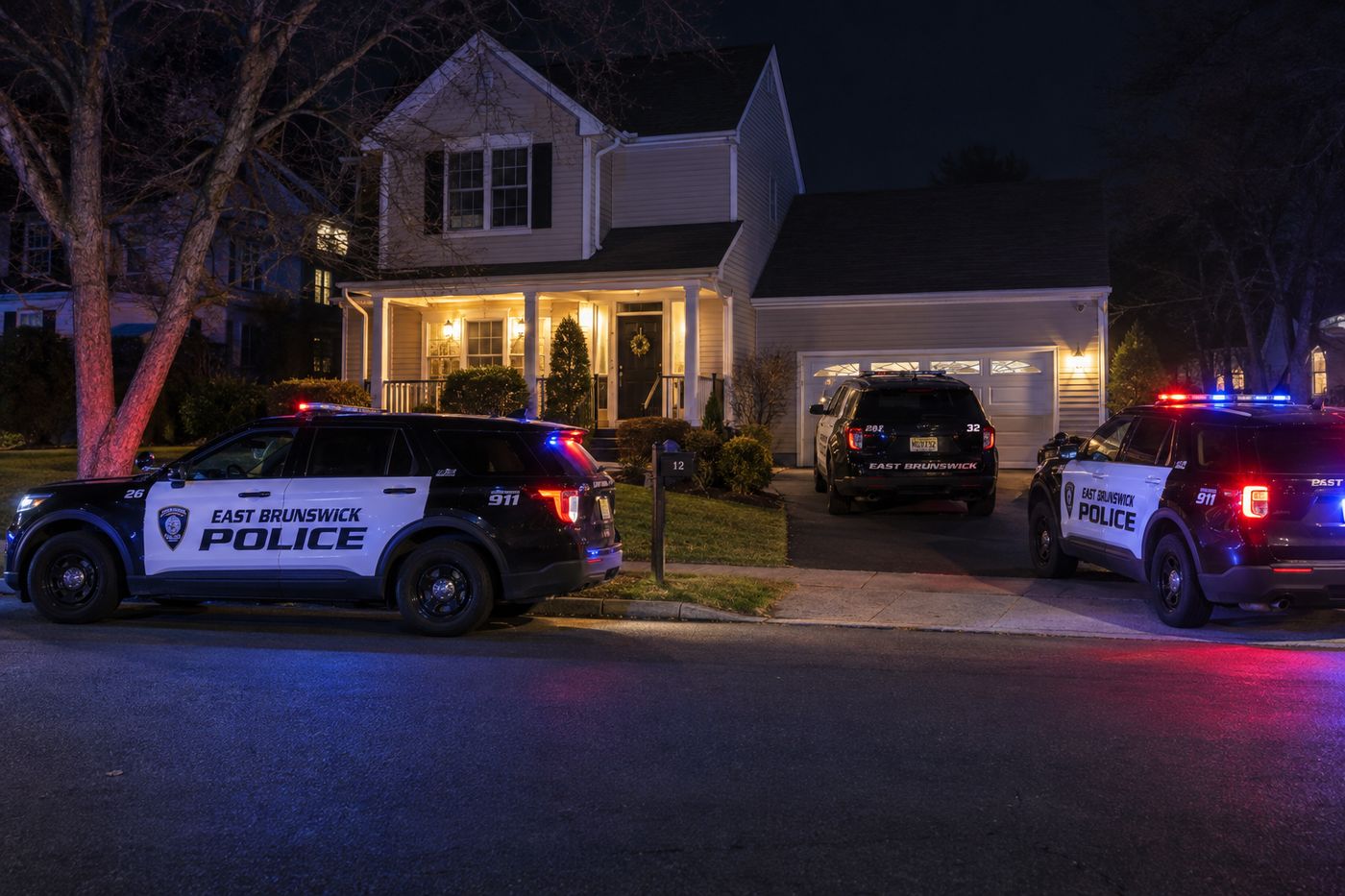
A New Jersey mother has been charged with obstructing the administration of law after East Brunswick police launched an extensive multi-day search for her 17-year-old son — including entering him into the national missing persons database and deploying significant patrol and detective resources — while he was hiding in her basement crawl space the entire time, with her full knowledge and active assistance.
The incident began September 15 at approximately 7:47 p.m., when the teen's father called East Brunswick police to report that his son had not arrived for a scheduled 6 p.m. drop-off at his home. Officers contacted the mother, Jennifer Buckley, who told them her son was not at her house and that she could not locate him. She added that the teen was upset, that he did not want to go to his father's home, and that she was concerned he might be a danger to himself. That final detail — a potential self-harm concern — transformed a routine non-appearance into a full emergency response. The East Brunswick Police Department entered the teen's information into the National Crime Information Center database as a missing person and began what it described as an "extensive effort" involving patrol officers, detectives, and department personnel over multiple days. Investigators ultimately identified discrepancies in Buckley's account that prompted them to search her home. The teen was found in the basement crawl space. He had been there throughout the entire search. He was unharmed. Buckley was arrested and charged with obstructing the administration of law under New Jersey statute 2C:29-1A.
"Providing false or misleading information to law enforcement undermines those efforts and unnecessarily diverts officers and resources away from members of our community who may need immediate police assistance." — East Brunswick Police Chief Frank LoSacco
The specific motivations behind Buckley's decision to hide her son and lie to police about his whereabouts during what appears to be a custody dispute have not been publicly disclosed. What is clear is that she compounded the situation in two significant ways: first by concealing the teen, and second by adding the self-harm concern to her account with police — an allegation that, if false, elevated the urgency and resource commitment of the search substantially beyond what a standard missed custody exchange would typically generate. Police departments treat missing minor reports involving potential self-harm with the same intensity as any life-safety emergency. Officers and detectives who spent days searching for a boy who was sitting in a crawl space beneath his mother's kitchen were not available for other calls during that time.
The case reflects a pattern of child custody disputes escalating into law enforcement resource consumption that police chiefs across the country have flagged as an increasing concern. Parents who use missing person reports as tools in custody conflicts — whether by concealing children, coaching children to resist custody transfers, or fabricating welfare concerns — impose significant costs on law enforcement agencies and on children themselves, who are placed in the middle of parental conflicts in ways that can cause lasting harm regardless of the legal outcome.
East Brunswick is a township in Middlesex County, New Jersey, with a population of approximately 48,000. The East Brunswick Police Department serves the township's roughly 19,000 households. Obstructing the administration of law under New Jersey statute 2C:29-1A is a disorderly persons offense — New Jersey's equivalent of a misdemeanor — carrying a maximum sentence of six months in jail and a $1,000 fine. Jennifer Buckley was charged and released. The teen was reunited with his father following the conclusion of the search. His name was not released.
When police receive a report that a child is missing and might be in danger, they respond accordingly — because that is their job and because the consequences of not responding are unacceptable. Jennifer Buckley leveraged that system while the child she claimed to be worried about sat in her basement. The obstruction charge she faces is appropriate. What the courts and child protective services decide about her ongoing relationship with her son should account for the fact that she placed him in a crawl space, lied to police about his whereabouts, added a self-harm allegation to magnify the response, and apparently sat in her home while an "extensive effort" searched for a boy who was underneath her.