
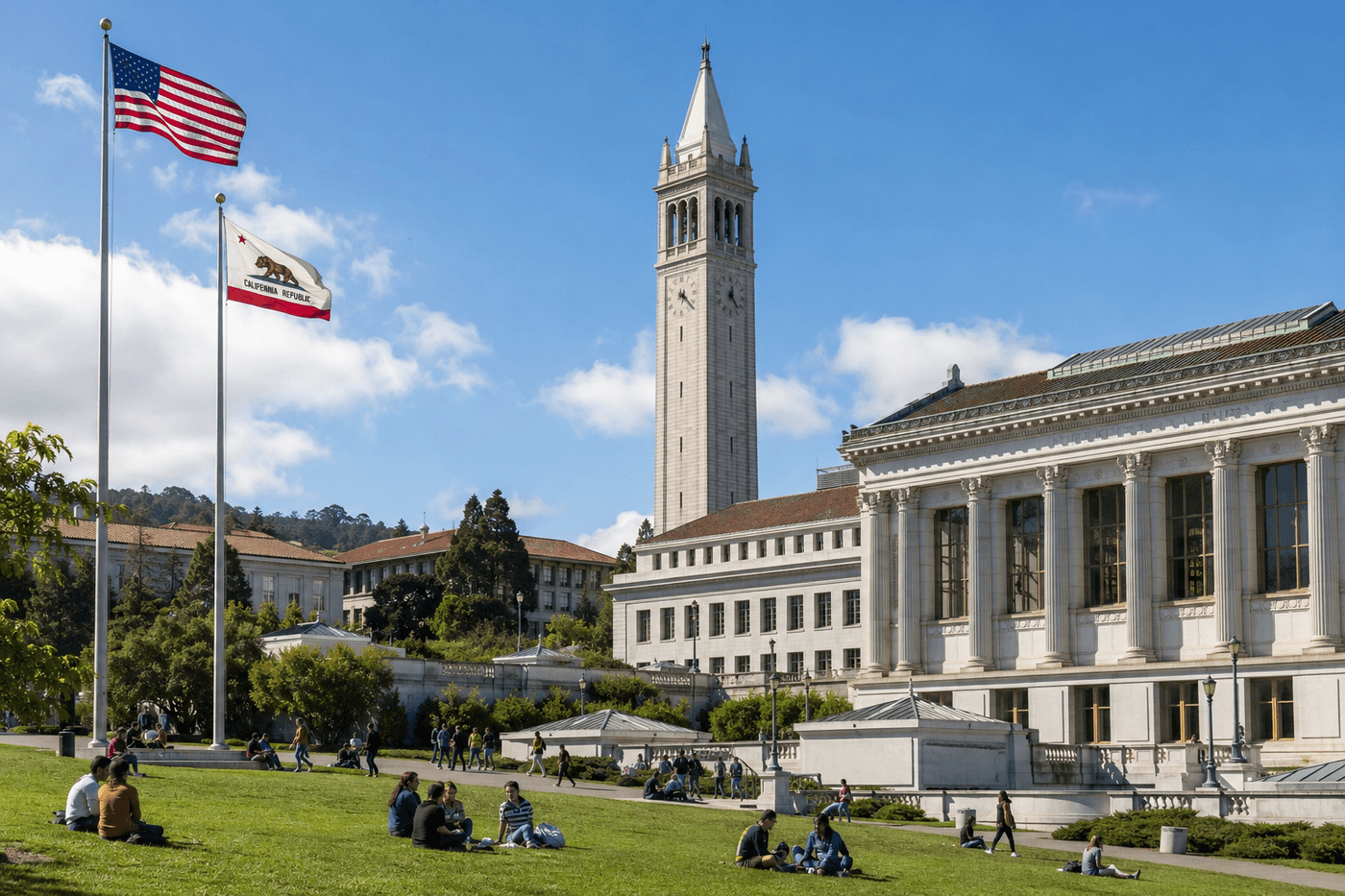
Former House Speaker Nancy Pelosi is cementing her political legacy in brick and mortar at the University of California, Berkeley, where the school announced Monday it has raised $35 million of a $50 million goal to establish the Nancy Pelosi Institute for Representative Democracy — an institute set to open in January 2027 when Pelosi steps down from Congress at age 86.
The institute, which Pelosi will co-direct and in which she will co-teach a course on Congress, is framed by UC Berkeley around four priorities: strengthening American democracy, addressing social and environmental challenges, promoting human and civil rights, and ensuring political leadership that represents what the university describes as "the full spectrum of perspectives and backgrounds." The institute will be housed at one of the nation's most aggressively progressive campuses and will focus on training the next generation of civic leaders through research, teaching, and advocacy programming. The university said the Berkeley location will make the institute accessible to first-generation and low-income students while providing opportunities typically associated with Ivy League institutions.
"The work of democracy is never finished, and securing its future is our greatest calling." — Nancy Pelosi
Pelosi is the first Californian and only woman to serve as Speaker of the House, holding the gavel from 2007 to 2011 under Presidents Bush and Obama, and again from 2019 to 2023. She announced her retirement from Congress earlier this year, triggering a Democratic primary battle for her deep-blue San Francisco district between California state Sen. Scott Wiener and Pelosi-endorsed Supervisor Connie Chan. The race turned turbulent over the weekend when video of Wiener being screamed at and chased out of a transgender rights event by anti-Israel protesters went viral — a preview of the ideological fractureslines that will define the contest for one of the most influential seats in California politics.
From a conservative standpoint, the Nancy Pelosi Institute is precisely what it appears to be: a multi-million dollar vehicle for institutionalizing a particular brand of left-of-center political advocacy at a campus that needs no encouragement in that direction. UC Berkeley has long been the intellectual home of progressive activism in California, from the Free Speech Movement to the faculty lounges that have spent decades advancing the regulatory, redistributive, and identitarian policies that Pelosi championed throughout her speakerships. Branding that infrastructure with her name and $50 million in philanthropic funding does not make it civic education — it makes it a partisan finishing school.
The Nancy Pelosi Institute joins a growing tradition of political figures establishing named centers at major universities upon retirement — a practice that has accelerated in recent decades across both parties. UC Berkeley's existing Goldman School of Public Policy and Institute of Governmental Studies offer comparable programming; the NPI will add a speaker-focused civic engagement dimension with Pelosi's direct participation in curriculum and course instruction.
ddNancy Pelosi is entitled to spend her post-congressional years however she chooses, and wealthy donors are entitled to fund whatever they like. But conservatives should understand exactly what the NPI represents: a $50 million, Berkeley-anchored political incubator for the next generation of progressive leaders, co-directed by the woman who presided over two of the most ideologically aggressive House Democratic caucuses in modern history. Calling it an institute for "representative democracy" is creative branding. What it is, is a legacy project — and it will operate for decades after Pelosi is gone.