
France's official United Nations mission publicly compared the United States to North Korea, Nicaragua, and Russia after Washington voted against reappointing Volker Türk as UN High Commissioner for Human Rights — and U.S. Ambassador Mike Waltz responded by pointing out exactly what France voted for and why the lecture lands hollow from an ally that just backed a man who spent four years scolding democracies while coddling authoritarian regimes.
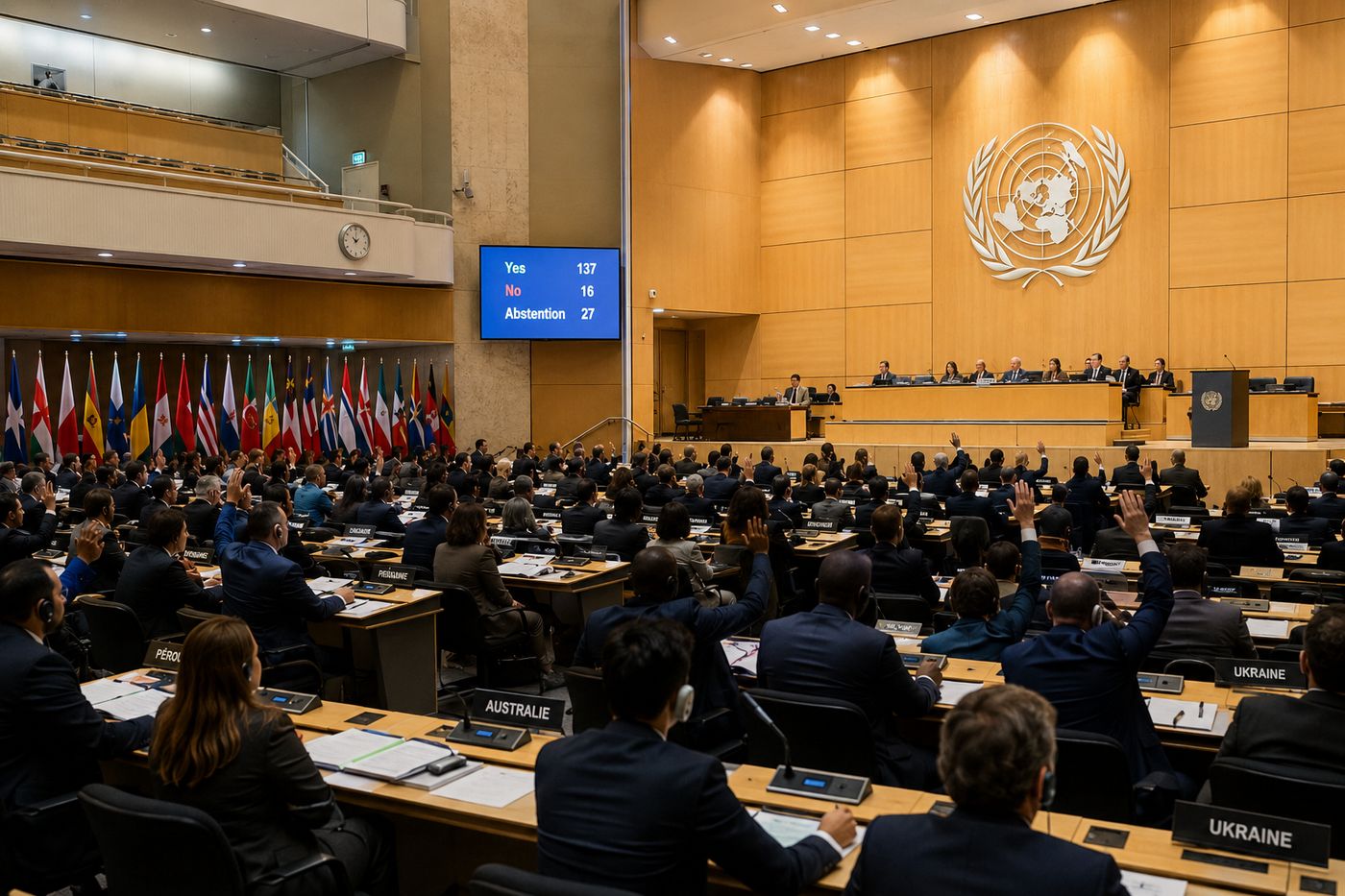
The UN General Assembly approved Türk's second four-year term 144-10 on Saturday. The United States was among the ten votes against, joined by Israel, Russia, North Korea, Nicaragua, and several others. France's official Geneva mission account posted on X: "The US used to be a beacon of human rights. Not anymore. Today, it stands alongside North Korea, Nicaragua, Mali and Russia, isolated. And the world no longer listens to it." The post was coordinated messaging, not an accidental slip. U.S. officials told Fox News Digital they were caught off guard by the "brazen" public attack — and rejected the suggestion that opposing a single UN official's reappointment constitutes opposing human rights.
"It is disappointing — though not surprising — that this is how France deflects on its shameful vote to coddle some of the worst human rights abusers. France voted for someone who has been lecturing free, sovereign democracies like the United States, the UK, and Israel, while cozying up to the world's worst oppressors." — U.S. Ambassador Mike Waltz
The American case against Türk was detailed and specific. U.S. Representative Jeff Bartos told the General Assembly that Türk had guided the UN human rights system "to its deathbed" by disproportionately condemning Western democracies — citing criticism directed at the United States, Britain, France, Australia, Italy, and, more than any other country, Israel — while remaining silent for 12 days after Iran launched a new wave of violence against its own citizens, then quickly condemning U.S. military action against Iran. Bartos also accused Türk's office of calling on Washington to lift sanctions on Cuba, maintaining a discriminatory database targeting American companies, and enabling what he called the UN's anti-Israel machinery.
France's UN ambassador defended Türk as a "voice of conscience" who had demonstrated "rigor and impartiality." The EU backed his reappointment. But the 144-10 vote result — achieved in a rushed timeline, with Türk's current term not expiring until October 11 — reflects what U.S. officials characterized as an expedited process designed to present Washington with a fait accompli rather than genuine multilateral deliberation. Türk, if he serves his full second term, will be the first UN human rights chief to complete two four-year terms since the position was established in 1993.
Volker Türk is an Austrian national and career UN official who became UN High Commissioner for Human Rights in 2022. His first term was marked by vocal criticism of Israeli military operations in Gaza, U.S. immigration enforcement, and conservative policies in several Western democracies — alongside what critics described as significantly more restrained language toward authoritarian governments in China, Iran, and Russia. France's decision to publicly attack the U.S. on social media rather than engage diplomatically reflects a broader pattern of European allies using UN proceedings to score points against Washington during the Trump administration.
France comparing the United States to North Korea for opposing the reappointment of a UN official who spent four years lecturing democracies while going easy on authoritarian regimes is not a serious human rights argument. It is a political gesture from an ally that has consistently valued UN institutional harmony over honest accountability. Waltz's response — pointing out that France voted to coddle the world's worst oppressors — is the right answer. The United States does not need a lecture on human rights from a country that just voted to give four more years to a man who stayed silent for nearly two weeks while Iran beat its own citizens in the streets.